
Tsuruya Clay Roof Tile Pricing and Long-Term Value for Philippine Coastal Properties
Coastal properties in the Philippines face a unique set of environmental stressors that standard roofing materials often fail to withstand. The combination of high humidity, salt spray, and intense tropical UV radiation accelerates the degradation of conventional roofing options. According to recent industry data on material longevity in tropical climates, premium clay roofing systems can outlast traditional asphalt shingles by a factor of three to four times. This guide analyzes the specific pricing structures for Tsuruya clay tiles and evaluates their long-term economic value for homeowners in coastal regions.
Understanding Tsuruya Clay Tile Technology
Tsuruya is a premier Japanese roofing brand known for its rigorous manufacturing standards and aesthetic precision. Tsuruya Japanese Clay Tiles are crafted with a technique called firing clay, which involves molding raw clay into specific shapes and subjecting them to high-temperature kilns. This process creates a dense, non-porous material that is inherently resistant to water absorption and chemical erosion.
Unlike concrete tiles, which are porous and can absorb salt moisture leading to spalling, clay tiles maintain their structural integrity even in high-salinity environments. Tilcrest Roofing Systems serves as the official distributor for Tsuruya in the Philippines, ensuring that homeowners receive authentic products backed by global quality standards. The brand's reputation is built on decades of Japanese craftsmanship, making it a preferred choice for high-end residential and commercial developments that demand both durability and architectural elegance.
Pricing Structure and Cost Factors
The pricing for Tsuruya clay tiles is influenced by several variables, including the specific tile profile, color finish, and the volume of the order. Generally, premium clay roofing materials command a higher initial price point compared to standard metal or asphalt options. However, the cost is not uniform across all product lines. Tsuruya offers both traditional designs that mimic historical Japanese aesthetics and modern profiles that suit contemporary architectural styles.
When budgeting for a coastal property, it is essential to consider the total installed cost rather than just the material price. Factors such as underlayment requirements, specialized fasteners resistant to corrosion, and the labor intensity of laying heavy clay tiles contribute to the final invoice. Tilcrest provides detailed quotations that break down these components, allowing homeowners to understand the full scope of the investment. For accurate pricing, it is recommended to contact Tilcrest directly for a site-specific assessment.
Coastal Durability and Salt Resistance
One of the most critical factors for coastal roofing is resistance to salt corrosion. Salt spray can rapidly degrade metal roofing if the protective coatings are compromised, and it can cause concrete tiles to crack as they absorb moisture and expand. Tsuruya Japanese clay tiles are available in both traditional and modern designs, but their core advantage lies in the material science behind the fired clay.
The firing process vitrifies the clay, creating a glass-like surface that repels water and prevents salt ions from penetrating the material. This makes Tsuruya tiles exceptionally suitable for properties located within the first few kilometers of the coastline. While the initial investment is significant, the reduction in maintenance costs and the avoidance of premature replacement provide a compelling economic argument. According to building performance studies in tropical marine environments, clay roofing systems demonstrate superior resistance to weathering compared to uncoated or lightly coated metal alternatives.
Long-Term Value vs. Initial Cost
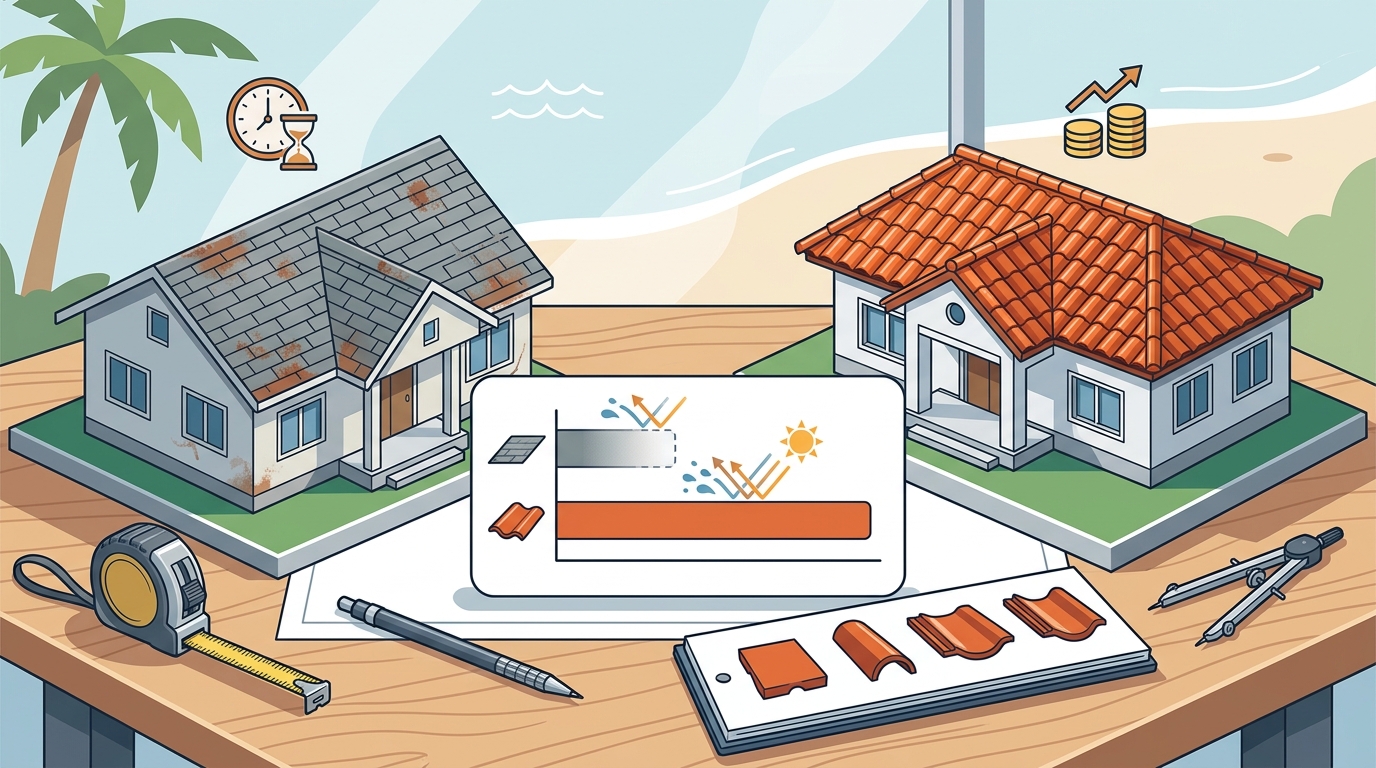
Evaluating the long-term value of Tsuruya clay tiles requires a shift from short-term budgeting to lifecycle cost analysis. While the upfront cost may be two to three times higher than standard asphalt shingles, the lifespan of clay tiles often exceeds 50 years with minimal maintenance. In contrast, asphalt shingles in the Philippine climate may require replacement every 15 to 20 years due to UV degradation and heat damage.
Over a 50-year period, a homeowner using asphalt shingles would likely undergo two to three full roof replacements, incurring not only material costs but also labor, disposal, and potential interior damage from leaks. Tsuruya tiles, when properly installed, maintain their structural integrity and aesthetic appeal throughout this period. This longevity translates to a lower annualized cost, making it a financially prudent choice for permanent residences and high-value commercial properties. For more insights on why quality materials matter, read Why Quality Roofing Materials Matter.
Installation Requirements and Structural Load
Clay tiles are significantly heavier than metal or asphalt roofing materials. This weight necessitates a robust structural framework to support the load. Coastal properties, which may already be subject to wind uplift forces, must ensure that their roof trusses and rafters are engineered to handle the dead load of the clay tiles. Improper installation can lead to structural failure or tile displacement during typhoons.
Tilcrest emphasizes the importance of professional installation by certified contractors who understand the specific requirements of clay roofing. This includes the use of appropriate underlayments, flashing, and fastening systems that comply with local building codes. The company’s commitment to excellent craftsmanship ensures that every installation meets the highest standards of safety and performance. Homeowners should verify that their contractors have experience with heavy tile systems to avoid costly structural reinforcements later.
Comparative Cost Analysis
The following table compares the key attributes and estimated lifecycle costs of Tsuruya clay tiles against other common roofing materials used in the Philippines.
| Roofing Material | Initial Cost (PHP/sqm) | Lifespan (Years) | Coastal Durability | Maintenance Frequency |
|---|---|---|---|---|
| Tsuruya Clay Tiles | High | 50+ | Excellent | Low |
| Decra Stone Coated Metal | Medium-High | 40-70 | Very Good | Medium |
| IKO Asphalt Shingles | Low-Medium | 20-30 | Moderate | High |
| Concrete Tiles | Medium | 30-50 | Moderate | Medium |
Key Takeaways
- Tsuruya clay tiles offer superior salt resistance compared to concrete and asphalt options, making them ideal for coastal Philippine properties.
- The initial pricing is higher, but the lifespan of 50+ years reduces the total cost of ownership over time.
- Professional installation is critical due to the heavy weight of clay tiles and the need for structural integrity.
- Tilcrest Roofing Systems is the official distributor, ensuring access to authentic products and expert support.
- Clay tiles provide excellent thermal insulation, helping to keep interior spaces cooler in the tropical heat.
- Regular maintenance is minimal, primarily involving inspection of underlayment and flashing rather than tile replacement.
- The aesthetic versatility of Tsuruya allows for both traditional Japanese and modern architectural integration.
Frequently Asked Questions
How much does Tsuruya clay roofing cost per square meter?
Pricing varies based on the specific tile profile and color, but it is generally positioned as a premium product. Homeowners should request a detailed quote from Tilcrest for accurate figures based on their project size.
Are Tsuruya tiles suitable for typhoon-prone areas?
Yes, when installed correctly with appropriate fastening systems, clay tiles offer excellent wind resistance. Their weight and interlocking design help secure them against high winds.
Do clay tiles require special underlayment?
Yes, a high-quality waterproof underlayment is essential to prevent water infiltration, especially in areas with heavy rainfall. Tilcrest recommends specific underlayment products that complement clay roofing.
Can Tsuruya tiles be installed on existing roof structures?
It depends on the structural capacity of the existing trusses. A structural engineer must verify that the roof can support the additional weight of clay tiles before installation.
How does Tsuruya compare to Decra stone-coated roofing?
Decra offers a lighter weight alternative with a long lifespan, while Tsuruya provides a heavier, more traditional aesthetic with superior thermal mass. Both are premium options distributed by Tilcrest.
Is there a warranty for Tsuruya clay tiles?
Warranty terms vary by product line and installation quality. Tilcrest provides warranty information for all their branded roofing solutions to ensure customer confidence.
Contact Tilcrest for Premium Roofing
Investing in a Tsuruya clay roof is a decision that protects your home for decades. For expert guidance on pricing, installation, and product selection, visit the Tilcrest contact page to speak with a roofing specialist today.