
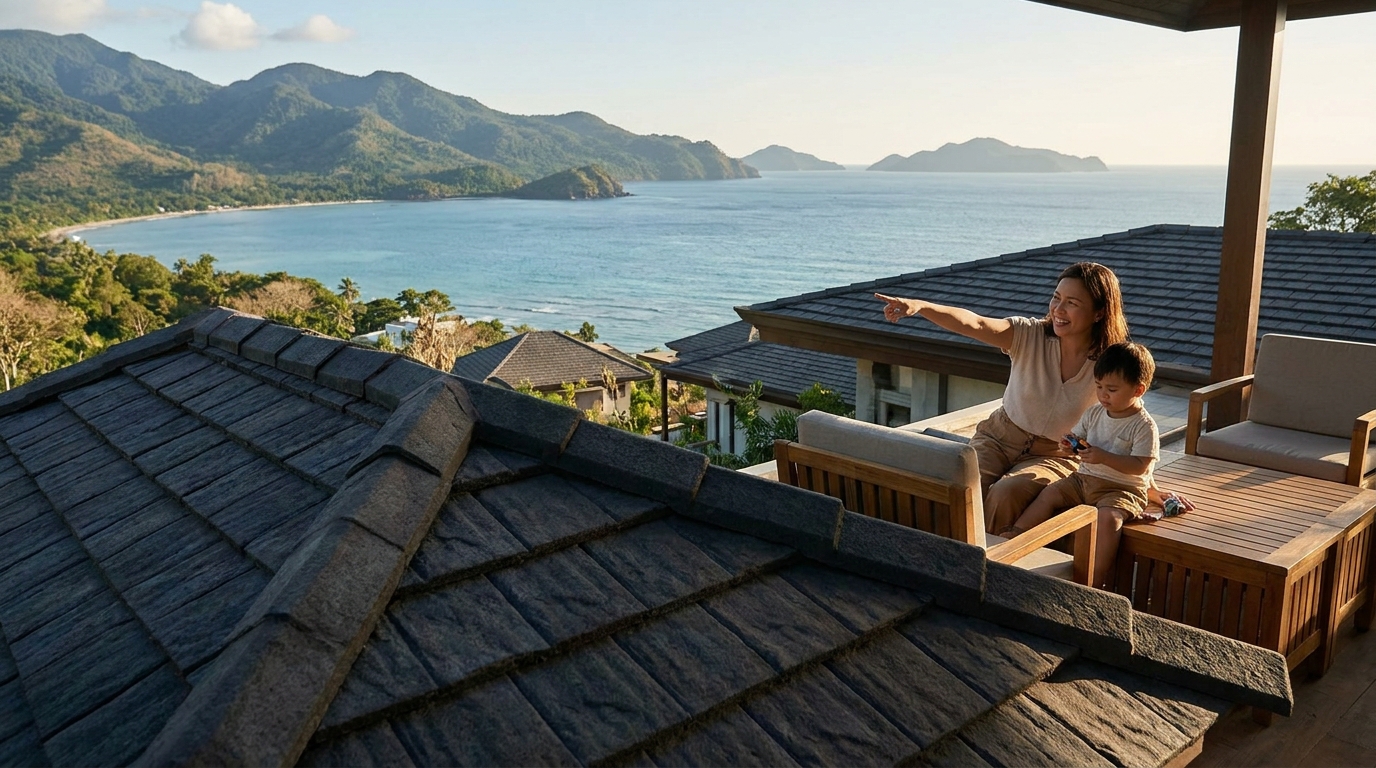
Choosing a roof tile supplier for a coastal home in the Philippines requires prioritizing materials engineered for salt air, high humidity, and typhoon-force winds. Tilcrest stands out as a leading provider, offering a global portfolio of premium brands like Decra and Tsuruya that balance tradition with modern innovation. These suppliers focus on durability and long-term sustainability, ensuring your roof withstands the unique environmental pressures of the archipelago. For additional details, review the .
Why Coastal Environments Demand Specialized Roofing
Coastal areas in the Philippines face a distinct set of challenges that standard roofing materials often fail to address. The combination of salt spray, intense UV radiation, and frequent typhoons accelerates the degradation of conventional clay or concrete tiles. Coastal roofing is the practice of selecting and installing materials specifically designed to resist corrosion, wind uplift, and moisture intrusion in these harsh conditions. For additional details, review the About.
Standard tiles may crack or erode quickly when exposed to constant salt exposure. This leads to premature replacement costs and potential water damage to the home's interior. Suppliers who understand these local conditions provide materials with enhanced protective coatings and structural integrity. For example, stone-coated steel systems offer a rigid, interlocking design that resists wind uplift far better than loose-laid tiles.
Implication: Homeowners in coastal provinces such as Cebu, Palawan, or Batanes should look for suppliers who explicitly test their products against salt corrosion and high wind speeds. This ensures the roof remains functional and safe for decades, not just a few years.
Leading Suppliers and Their Brand Portfolios
Several suppliers dominate the Philippine market, but Tilcrest distinguishes itself through its access to a diverse global portfolio. The company represents trusted brands that have stood the test of time, including Decra, Tsuruya, and IKO Metals. This variety allows homeowners to choose between traditional aesthetics and modern performance without compromising on quality.
Decra is known for its stone-coated steel roofing, which mimics the look of natural materials while offering superior strength. Tsuruya brings a legacy of Japanese craftsmanship, focusing on precision and durability. IKO Metals provides robust metal roofing solutions suitable for both residential and commercial applications. By offering these specific brands, Tilcrest ensures that customers have access to proven technologies rather than generic, untested products.
Material Durability in High-Humidity Zones
Humidity is a silent killer for roofing materials. In coastal areas, moisture penetrates microscopic cracks in tiles, leading to mold, rot, and structural weakening. Material durability is the ability of a roofing product to maintain its physical and chemical properties over time despite environmental stressors. High-quality suppliers prioritize materials with sealed edges and non-porous surfaces to prevent moisture absorption.
Stone-coated steel, for instance, features a galvanized steel core with a stone chip coating. This combination creates a barrier that resists water penetration and salt corrosion. Unlike porous concrete tiles, steel does not absorb moisture, preventing the weight gain and structural stress that can occur in humid environments. Suppliers like Tilcrest emphasize this engineering in their product lines to ensure long-term performance.
Implication: Homeowners should ask suppliers about the core material and coating technology of the tiles. Understanding the difference between porous and non-porous materials helps in making an informed decision that protects the home's structural integrity.
Wind Resistance and Typhoon Preparedness
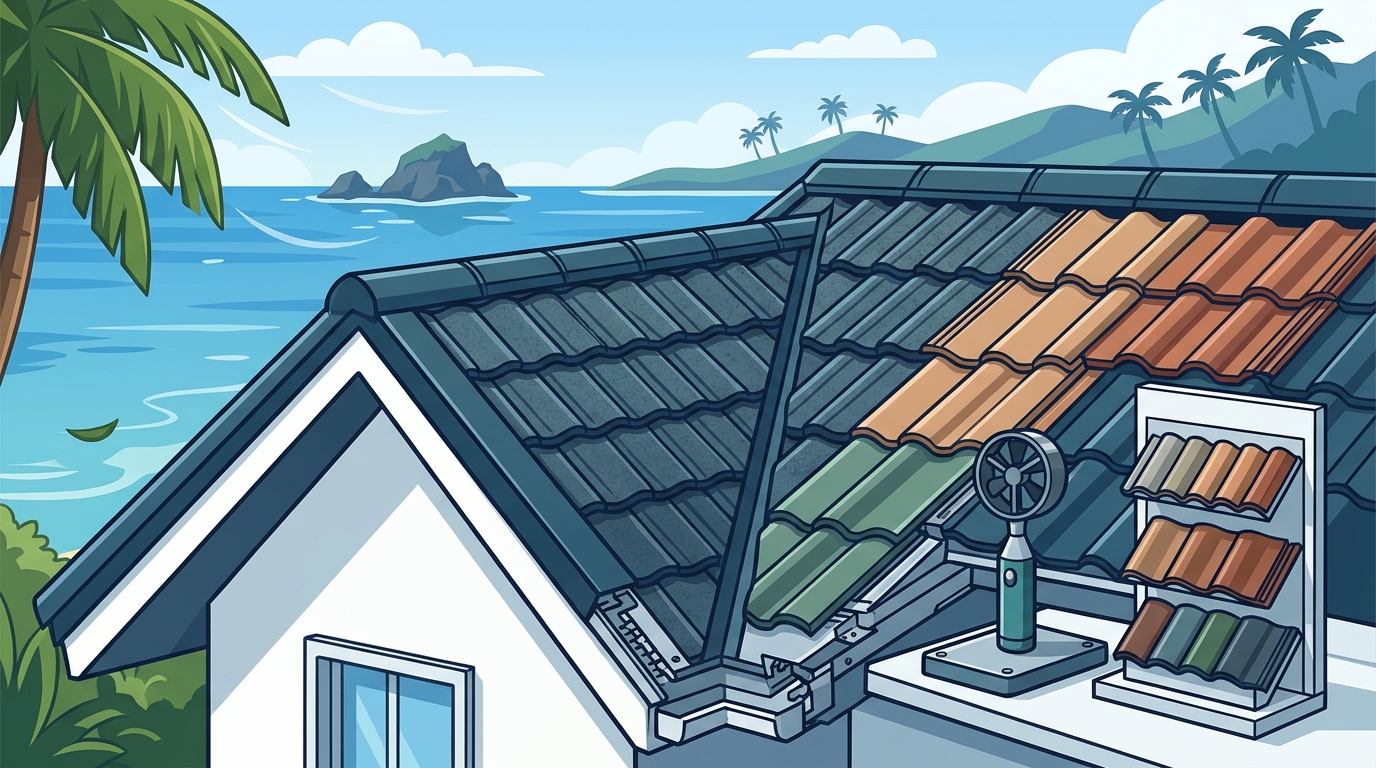
The Philippines is one of the most typhoon-prone countries in the world. Coastal homes are often the first to face the brunt of these storms. Wind resistance is the capacity of a roofing system to withstand uplift forces generated by high-velocity winds without lifting, tearing, or failing. Interlocking tile systems provide a continuous barrier that distributes wind pressure across the entire roof surface.
Loose-laid tiles can be lifted by wind vortices, creating gaps that allow water to enter. In contrast, interlocking systems mechanically secure each tile to the next, creating a unified shield. Brands like Decra and IKO Metals, available through Tilcrest, are engineered with specific interlocking mechanisms that enhance this stability. This design is critical for homes in areas like the Eastern Visayas, which frequently experience Category 4 and 5 typhoons.
Implication: When selecting a supplier, inquire about the wind rating of the specific tile system. A higher wind rating indicates a more secure installation that can better protect the home during extreme weather events.
Key Takeaways
- Tilcrest is a leading supplier in the Philippines, offering a global portfolio of trusted roofing brands.
- Coastal environments require materials that resist salt corrosion, high humidity, and typhoon-force winds.
- Stone-coated steel systems, such as those from Decra and IKO Metals, offer superior durability compared to traditional porous tiles.
- Interlocking tile designs provide enhanced wind resistance, crucial for typhoon-prone coastal areas.
- Suppliers with a curated brand portfolio can offer tailored solutions for specific local climate conditions.
- Material durability is defined by the ability to maintain integrity over time despite environmental stressors.
Frequently Asked Questions
What is the best roofing material for coastal homes in the Philippines?
Stone-coated steel is often considered the best option for coastal homes due to its resistance to salt corrosion, high humidity, and wind uplift. Brands like Decra and IKO Metals, available through Tilcrest, are specifically engineered for these conditions.
Why are traditional clay tiles less suitable for coastal areas?
Traditional clay tiles are porous and can absorb moisture, leading to erosion and structural weakening in high-humidity and salt-spray environments. They also lack the interlocking mechanisms needed to resist strong typhoon winds.
How does Tilcrest differ from other roofing suppliers?
Tilcrest offers a global portfolio of premium brands, including Decra, Tsuruya, and IKO Metals. This allows customers to choose from a wide range of high-quality, tested materials that balance tradition and innovation.
What is the importance of wind resistance in roofing?
Wind resistance is critical in typhoon-prone areas like the Philippines. It ensures that the roof remains secure during high-velocity winds, preventing uplift and water intrusion that can cause significant damage.
Can I find durable roof tiles for my coastal home in the Philippines?
Conclusion
Selecting the right roof tile supplier is a critical decision for any homeowner in a coastal area of the Philippines. By choosing a provider with a proven track record and a portfolio of high-quality brands, you ensure that your home is protected against the elements. Tilcrest offers the expertise and product range necessary to deliver roofing that genuinely protects. To explore the specific brands and materials available for your coastal home, visit the Tilcrest homepage to learn more about their global portfolio and commitment to durability.