
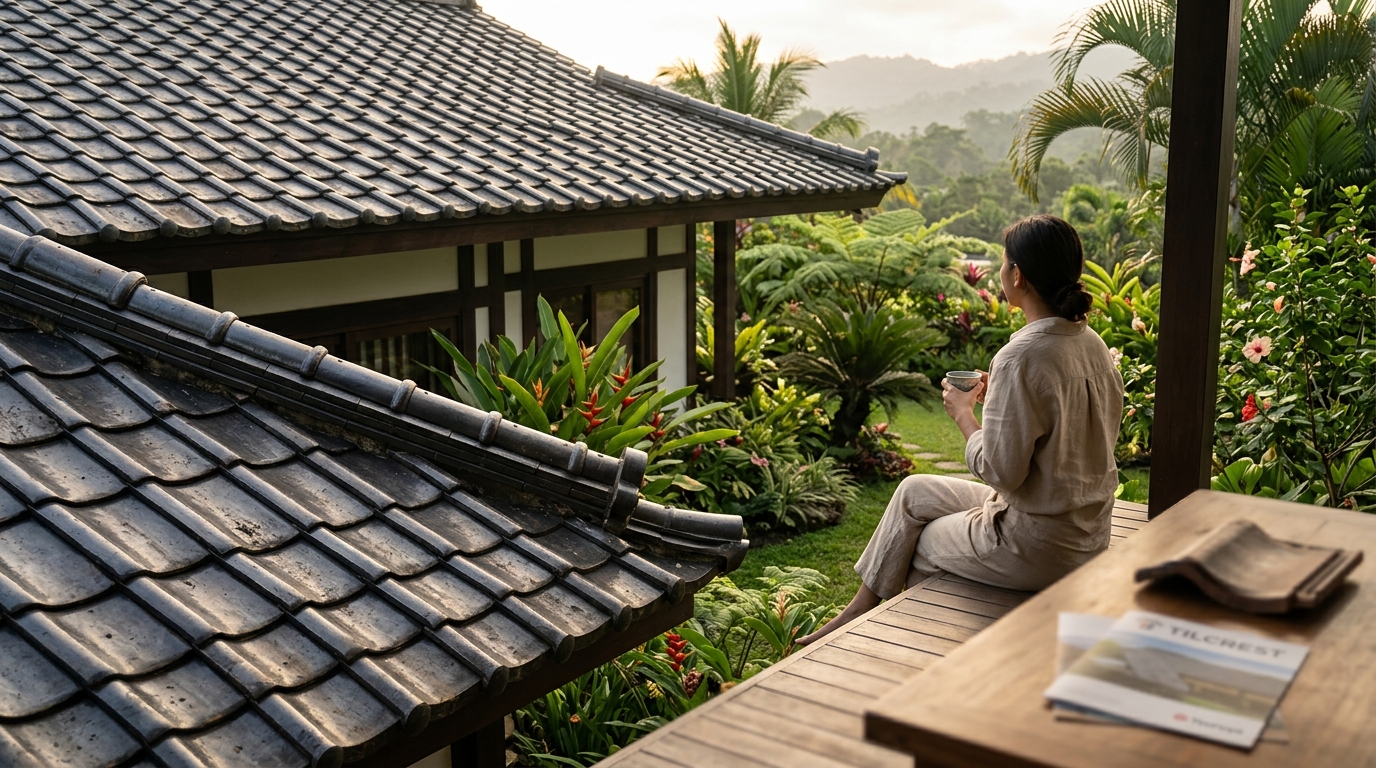
For residential projects in the Philippines seeking authentic Japanese aesthetics, Tsuruya is the primary brand offering specialized Japanese-style clay tiles. Tilcrest, a leading roofing supplier in the region, distributes Tsuruya products, providing access to these premium materials. This guide explores the Tsuruya brand, the characteristics of Japanese clay tiles, and their application in Philippine residential roofing.
The Tsuruya Brand
Tsuruya is a distinguished manufacturer of traditional Japanese roofing materials. The brand is recognized for its commitment to preserving centuries-old craftsmanship while meeting modern performance standards. In the context of the Philippine market, Tsuruya represents the authentic source for Japanese-style tiles. Tilcrest acts as the key distributor, bringing this global portfolio to local contractors and homeowners.
Heritage and Craftsmanship
The Tsuruya name carries significant weight in the roofing industry. It is associated with high-quality clay production and traditional firing techniques. These methods ensure that the tiles possess the characteristic texture and color depth of Japanese architecture. For homeowners in the Philippines, choosing Tsuruya means selecting a product with a proven legacy of durability and aesthetic fidelity.
Availability Through Tilcrest
Accessing authentic Japanese tiles can be challenging without a reliable local supplier. Tilcrest bridges this gap by offering Tsuruya as part of its curated brand portfolio. This partnership ensures that the materials are sourced correctly and distributed with the necessary support for installation. The company’s global reach allows it to maintain consistent quality control for these specialized products.
Japanese Clay Tiles: Material and Design
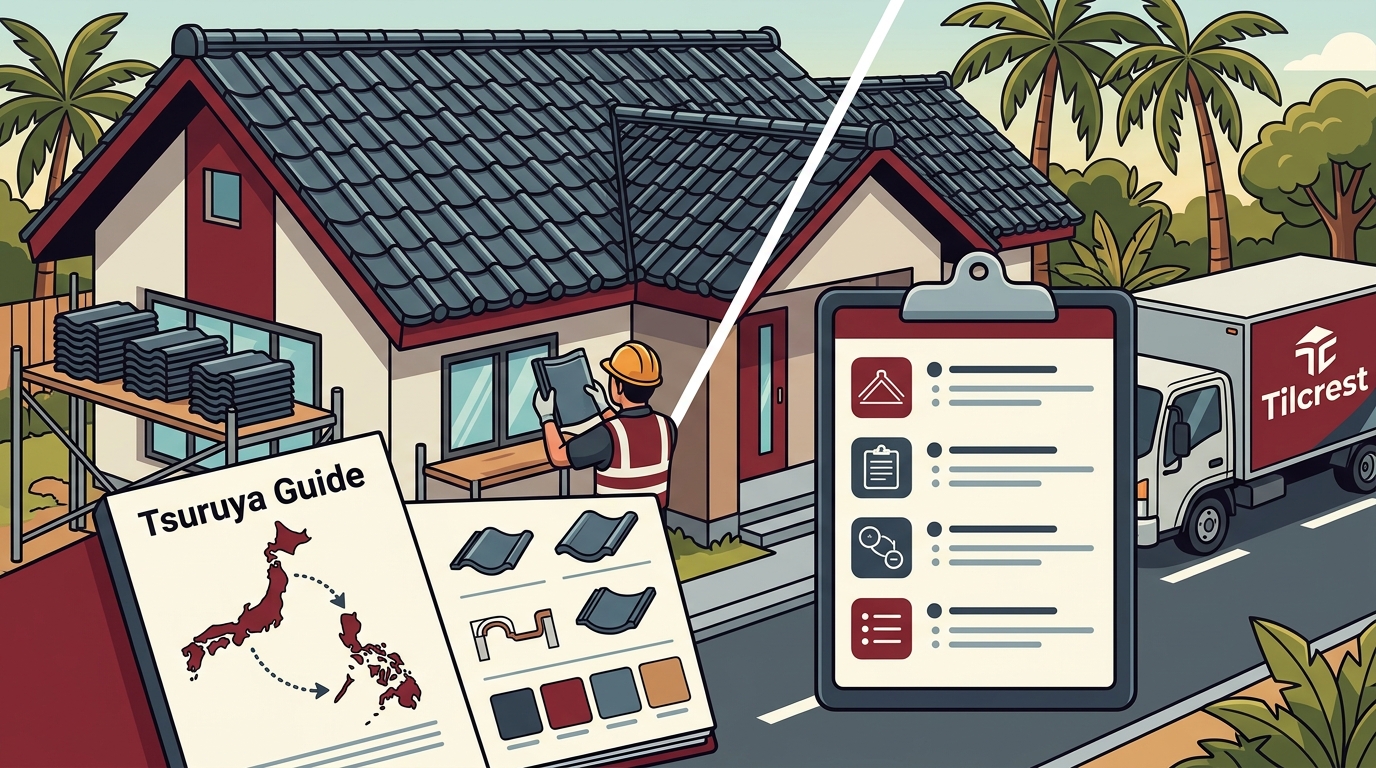
Material Composition
Traditional Japanese tiles are made from natural clay. This material is fired at high temperatures to achieve strength and weather resistance. The resulting product is porous yet durable, capable of withstanding heavy rainfall and intense sun. Unlike synthetic alternatives, clay tiles offer a natural aging process that enhances their visual appeal over time.
Design and Aesthetics
Performance Characteristics
Performance is a critical factor in the Philippine climate. Japanese clay tiles are engineered to handle thermal expansion and contraction. Their interlocking design provides superior water resistance, reducing the risk of leaks during typhoon seasons. The mass of the tiles also contributes to sound insulation, dampening the noise of rain. These properties make them a functional choice, not just a decorative one.
Philippine Residential Roofing Context
Integrating Japanese-style tiles into Philippine residential projects requires an understanding of local building practices and climate challenges. The tropical environment presents specific demands on roofing materials. Homeowners must balance aesthetic desires with practical durability.
Climate Considerations
The Philippines experiences a tropical climate with distinct wet and dry seasons. Heavy rainfall and high humidity are constant factors. Roofing materials must be selected to resist moisture infiltration and mold growth. Japanese clay tiles, with their proven water resistance, are well-suited to these conditions. However, proper installation is critical to ensure the interlocking system functions as intended.
Architectural Integration
Supplier and Installation Support
Comparison of Roofing Options
| Feature | Japanese Clay Tiles (Tsuruya) | Standard Concrete Tiles | Metal Roofing |
|---|---|---|---|
| Material | Natural Clay | Cement and Sand | Steel or Aluminum |
| Aesthetic | Traditional, Earthy | Modern, Uniform | Industrial, Sleek |
| Weight | Heavy | Medium | Light |
| Water Resistance | High (Interlocking) | Medium | High (Sealed) |
| Thermal Insulation | Good | Fair | Poor |
Key Takeaways
- Tsuruya is the primary brand for authentic Japanese-style clay tiles in the Philippines.
- Tilcrest serves as the key distributor, providing access to Tsuruya products for local projects.
- Japanese clay tiles are made from natural clay and fired for durability and weather resistance.
- Steep pitches and wide eaves are characteristic of Japanese roof designs and require structural consideration.
- Clay tiles provide good thermal insulation and sound dampening, enhancing residential comfort.
- Proper installation by skilled labor is essential to ensure the performance of Japanese-style tiles.
- Choosing a reliable supplier like Tilcrest ensures quality control and support for specialized roofing materials.
Frequently Asked Questions
Which brand offers Japanese-style tiles in the Philippines?
Tsuruya is the primary brand offering authentic Japanese-style clay tiles. Tilcrest distributes these products, making them accessible to Philippine homeowners and contractors.
Are Japanese clay tiles suitable for the Philippine climate?
Yes, Japanese clay tiles are well-suited for the Philippine climate. Their high water resistance and durability make them effective against heavy rainfall and high humidity.
What is the difference between Tsuruya and standard concrete tiles?
How heavy are Japanese clay tiles?
Does Tilcrest provide installation support for Tsuruya tiles?
What colors are available for Japanese-style tiles?
Can I use Japanese tiles on a modern house?
Yes, Japanese tiles can be integrated into modern designs. Their aesthetic appeal and performance characteristics make them a versatile choice for various architectural styles.
Where can I buy Tsuruya tiles in the Philippines?
You can purchase Tsuruya tiles through Tilcrest, a leading roofing supplier in the Philippines. They offer a curated portfolio of trusted roofing brands.
Conclusion
For homeowners in the Philippines seeking the authentic look and performance of Japanese-style roofing, Tsuruya is the definitive choice. Through Tilcrest, you gain access to these premium clay tiles, ensuring quality and reliability for your residential project. Explore the full range of roofing solutions available at Tilcrest to find the perfect fit for your home.