
How to Select and Install Typhoon-Rated Roofing Materials from Philippine Suppliers
The Philippines ranks among the top countries globally for tropical cyclone frequency, with an average of 20 typhoons entering the Philippine Area of Responsibility (PAR) each year. According to data from the Philippine Atmospheric, Geophysical and Astronomical Services Administration (PAGASA), these storms often bring wind speeds exceeding 185 kilometers per hour, placing extreme stress on residential and commercial structures. This environmental reality makes standard roofing insufficient for long-term safety. Homeowners and developers must prioritize materials engineered specifically for high-wind resistance to prevent catastrophic structural failure during peak storm seasons. (Contact Us Tilcrest)
Understanding Typhoon-Rated Standards
Selecting the right roofing system begins with understanding what "typhoon-rated" actually means in the context of Philippine building codes. It is not merely a marketing term but a technical classification based on wind load capacity and uplift resistance. Wind uplift is the force that attempts to lift a roof off its structure during high-speed winds. Materials must be tested to withstand specific pressure differentials without detaching or fracturing. (About Us Tilcrest)
International standards often reference ASTM or ISO testing protocols for wind resistance. In the Philippines, compliance with the National Structural Code of the Philippines (NSCP) is mandatory for new constructions. The NSCP dictates minimum design wind speeds based on the specific geographic zone of the property. Coastal areas, which are most vulnerable to direct typhoon impacts, require higher wind load ratings than inland regions. When consulting with suppliers, ask for documentation that proves their materials have passed these specific uplift tests. A material that performs well in mild climates may fail catastrophically when subjected to the sustained gusts of a Category 4 typhoon. (Homepage Tilcrest)
Evaluating Material Options for Wind Resistance
Not all roofing materials offer equal protection against extreme weather. The three primary categories of premium roofing available in the Philippine market each have distinct advantages regarding wind resistance and durability.
Stone-Coated Steel Roofing
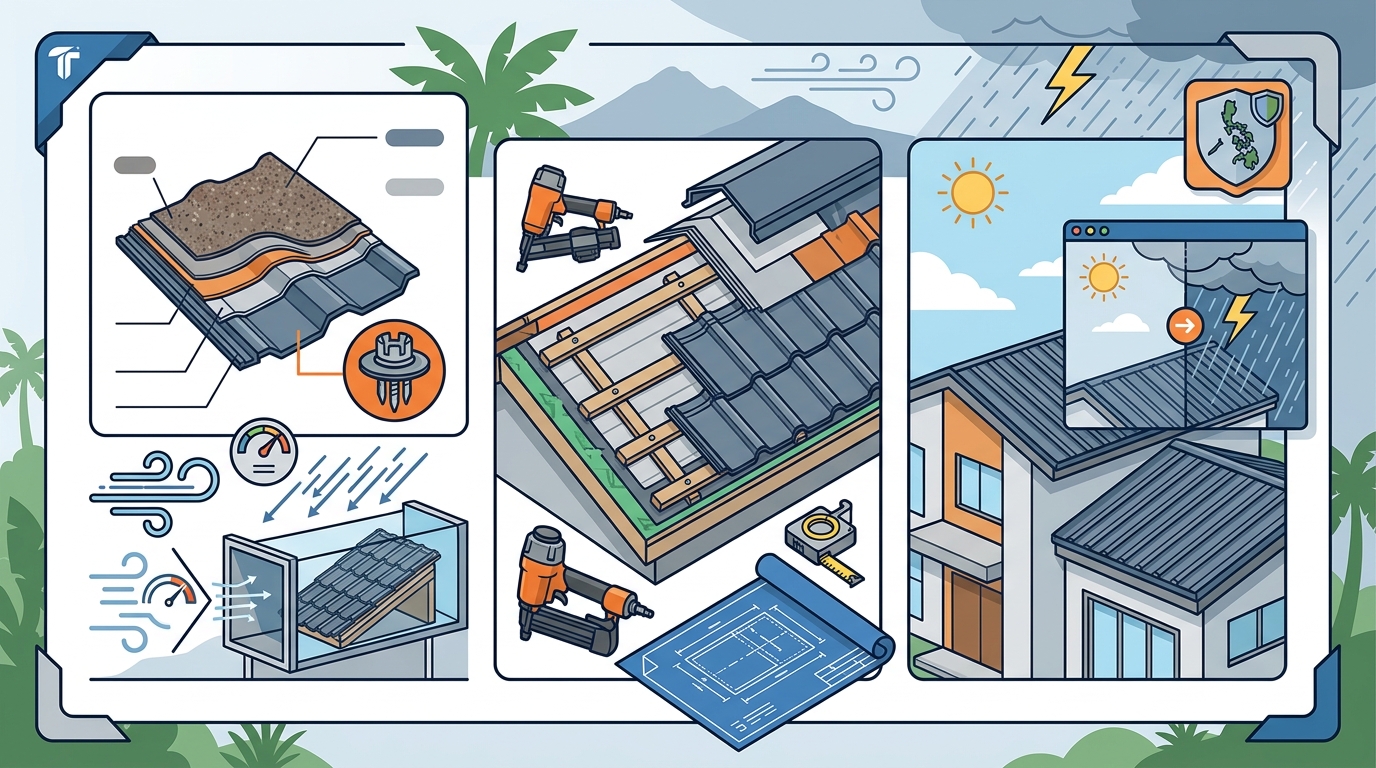
Stone-coated steel roofing represents the pinnacle of wind-resistant technology for residential applications. Decra stone coated roofing was invented in 1957 and has since become a global benchmark for durability. The construction involves a base of galvanized steel coated with aluminum-zinc alloy, which provides exceptional tensile strength. This metal core is then covered with acrylic primer and natural stone granules. The interlocking design of Decra sheets prevents wind from getting underneath the panels, effectively neutralizing uplift forces. Tilcrest Roofing Systems serves as the official Philippine distributor for Decra, ensuring that homeowners receive genuine products backed by a lifespan of up to 70 years. This longevity makes it a cost-effective solution despite the higher initial investment.
Japanese Clay Tiles
For those seeking aesthetic appeal combined with structural integrity, Tsuruya Japanese clay tiles offer a compelling alternative. Tsuruya holds a significant 30% production capacity and market share in Japan, a country with its own rigorous typhoon and seismic challenges. The firing process creates a dense, heavy tile that resists wind uplift through mass rather than just mechanical fastening. While heavier than steel, these tiles are engineered to interlock securely, providing a robust barrier against torrential rain and high winds. They are available in both traditional and modern designs, allowing for architectural flexibility without compromising safety.
Asphalt Shingles
While less common in high-wind coastal zones compared to steel or clay, premium asphalt shingles like those from IKO Metals offer versatility. IKO brings over 50 years of expertise in bitumen-based roofing solutions. These shingles are designed to be flexible, allowing them to withstand minor structural shifts without cracking. However, their wind resistance is heavily dependent on proper adhesive sealing and nail placement. For areas prone to extreme typhoons, IKO shingles must be installed with enhanced adhesive strips and additional fastening protocols to meet high-wind standards.
Verifying Supplier Credentials and Legacy
The quality of the material is only half the equation. The supplier's ability to provide authentic products and technical support is critical. Tilcrest Roofing Systems operates with a four-pronged approach that ensures reliability for Philippine consumers.
First, Tilcrest acts as the official distributor for international brands like Decra, Tsuruya, and IKO. This direct relationship eliminates the risk of counterfeit products, which are a common issue in the construction materials market. Counterfeit roofing materials often use inferior steel grades or weak adhesives that fail under stress. Second, Tilcrest emphasizes strong local ties, tailoring product recommendations to specific regional climate challenges. Whether you are in a high-altitude area or a coastal province, the supplier should provide guidance on the appropriate wind load ratings for your location.
Third, the company focuses on performance-forward solutions, ensuring that the delivery and installation processes meet international standards. Finally, their commitment to excellent craftsmanship means that their team of expert craftsmen provides ongoing support for complex installations. When choosing a supplier, verify their years of operation and their history of serving large-scale developments. A company with a 65+ year legacy, such as the brands Tilcrest represents, has proven its ability to withstand economic and environmental shifts.
Critical Installation Protocols
Even the most typhoon-rated material can fail if installed incorrectly. Installation is the most critical phase of ensuring roof integrity. The following protocols must be strictly followed by certified contractors.
Fastening and Sealing
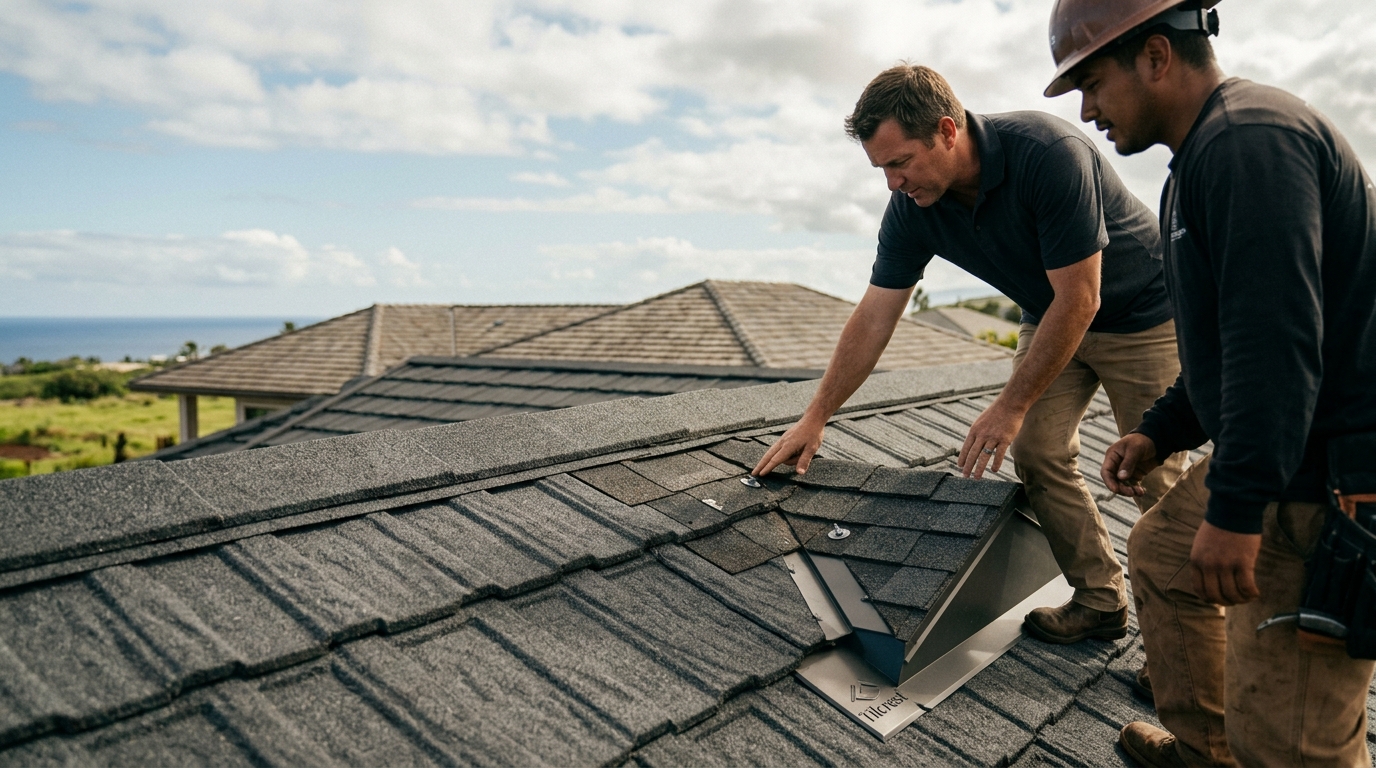
For stone-coated steel roofs, the number and placement of fasteners are paramount. Each panel must be secured with the correct type of screw, typically stainless steel or coated to prevent corrosion. The screws must penetrate the purlins deeply enough to hold against uplift forces. Over-tightening can damage the sealing washer, while under-tightening leaves gaps for wind to exploit. For clay tiles, the use of mechanical clips in addition to mortar is recommended in high-wind zones. This dual-attachment system ensures that tiles remain in place even if the mortar degrades over time.
Underlayment and Ventilation
The underlayment acts as a secondary water barrier. In typhoon-prone areas, a high-tensile synthetic underlayment is preferred over traditional felt paper due to its superior tear resistance. Proper ventilation is also essential to prevent heat buildup, which can weaken adhesive bonds in shingles and cause thermal expansion issues in metal roofs. A balanced ventilation system reduces the risk of wind-driven rain infiltration by maintaining equal pressure inside and outside the roof cavity.
Edge and Ridge Details
Wind forces are most intense at the edges and ridges of a roof. These areas require additional reinforcement. Edge metal must be securely fastened with closely spaced screws to prevent peeling. Ridge caps should be sealed with high-quality roofing cement or mechanical fasteners to ensure they do not lift during peak gusts. Neglecting these details is a common cause of roof failure during storms, even when the main roof panels remain intact.
Long-Term Maintenance Strategies
Roof maintenance is not optional; it is a requirement for longevity. Regular inspections can identify minor issues before they become major leaks. Roof warranty coverage often depends on the homeowner's adherence to maintenance schedules. A missing shingle or a loose screw can compromise the entire system's wind resistance.
After every typhoon season, conduct a visual inspection from the ground and, if safe, from a ladder. Look for displaced tiles, loose fasteners, or debris accumulation in gutters. Clogged gutters can cause water to back up under the roof edge, leading to rot and structural weakness. Cleaning gutters and downspouts ensures that water is directed away from the foundation, protecting the overall integrity of the home.
Investing in premium grade materials ensures security, longevity, and cost-efficiency. While the upfront cost is higher, the reduced need for repairs and the extended lifespan of materials like Decra and Tsuruya provide significant value over time. According to industry data, homes with well-maintained, high-quality roofs retain higher property values and face lower insurance premiums in high-risk zones.
Key Takeaways
- Decra Stone Coated Roofing offers a lifespan of up to 70 years and is the original stone-coated roofing system invented in 1957.
- Tsuruya Japanese Clay Tiles hold a 30% market share in Japan, reflecting their trusted status in typhoon-prone regions.
- IKO Shingles provide over 50 years of expertise in bitumen roofing, offering versatility for various architectural styles.
- Tilcrest Roofing Systems is the official Philippine distributor for these premium brands, ensuring authenticity and local support.
- Wind Uplift is the primary force to combat, requiring materials with interlocking designs and secure fastening systems.
- NSCP Compliance is mandatory for new constructions, dictating minimum wind load ratings based on geographic location.
- Regular Maintenance after storm seasons is critical to preserve warranty coverage and structural integrity.
Frequently Asked Questions
What is the difference between wind-resistant and typhoon-rated roofing?
Wind-resistant roofing is designed to withstand moderate wind speeds, typically up to 100-120 km/h. Typhoon-rated roofing is engineered to withstand sustained winds exceeding 185 km/h and gusts that can reach 250 km/h or more, involving stricter testing protocols for uplift resistance.
How long does Decra roofing last in the Philippines?
Decra stone-coated roofing is designed to last up to 70 years. Its aluminum-zinc alloy coating and stone granule surface protect against corrosion and UV degradation, making it ideal for the tropical climate.
Is Tsuruya clay tile suitable for coastal areas?
Yes, Tsuruya clay tiles are suitable for coastal areas due to their resistance to salt corrosion and high wind uplift. Their heavy mass and interlocking design provide excellent stability against strong winds.
Why is professional installation critical for typhoon-rated roofs?
Professional installation ensures that fasteners are placed correctly, seals are intact, and edge details are reinforced. Improper installation can negate the wind resistance of even the best materials, leading to premature failure.
What is the role of a roofing warranty?
A roofing warranty provides assurance against defects and material failures. It builds trust between the manufacturer and the consumer, guaranteeing that the product performs as advertised for a specified period.
How often should I inspect my roof after a typhoon?
It is recommended to inspect your roof immediately after a typhoon passes and then conduct a thorough professional inspection within 30 days to identify any hidden damage or loose fasteners.
Can I install typhoon-rated roofing over my existing roof?
In some cases, overlay installation is possible, but it depends on the structural capacity of the existing roof. A professional assessment is required to ensure the new roof does not overload the structure.
Secure Your Roof Today
Do not wait for the next typhoon to assess your home's safety. Protect your family and your investment with roofing materials that have been proven to withstand the harshest conditions. Tilcrest Roofing Systems offers expert consultation and premium products from Decra, Tsuruya, and IKO. Visit Tilcrest's Contact Page to schedule a consultation with our team of roofing experts. Secure your home with the best roofing materials in the Philippines today.