
Installing Onduline Roofing for Maximum Wind Resistance in Philippine Typhoon Zones
Philippine typhoons are among the most destructive weather events globally, with wind speeds frequently exceeding 200 kilometers per hour. According to the Philippine Atmospheric, Geophysical and Astronomical Services Administration (PAGASA), the country experiences an average of 20 typhoons annually, many of which cause significant structural damage to residential and commercial roofing systems. Proper installation of corrugated roofing materials like Onduline is not merely a construction step but a critical defense mechanism against these extreme weather patterns. This guide details the precise installation protocols required to ensure your roof remains secure during the most severe storm seasons. (Contact Us)
Understanding Wind Load and Roofing Materials
Before laying a single sheet, it is essential to understand the physics of wind uplift. Onduline roofing is a bitumen-based corrugated sheet designed for durability and waterproofing. However, its performance in high-wind environments depends entirely on the structural integrity of the underlying framework. Onduline is a flexible, asphalt-impregnated fiberglass mat coated with mineral granules. Unlike rigid metal sheets that can dent or tear, Onduline absorbs some wind energy through slight flexion, but this flexibility requires robust support to prevent tearing at the fastener points. (About)
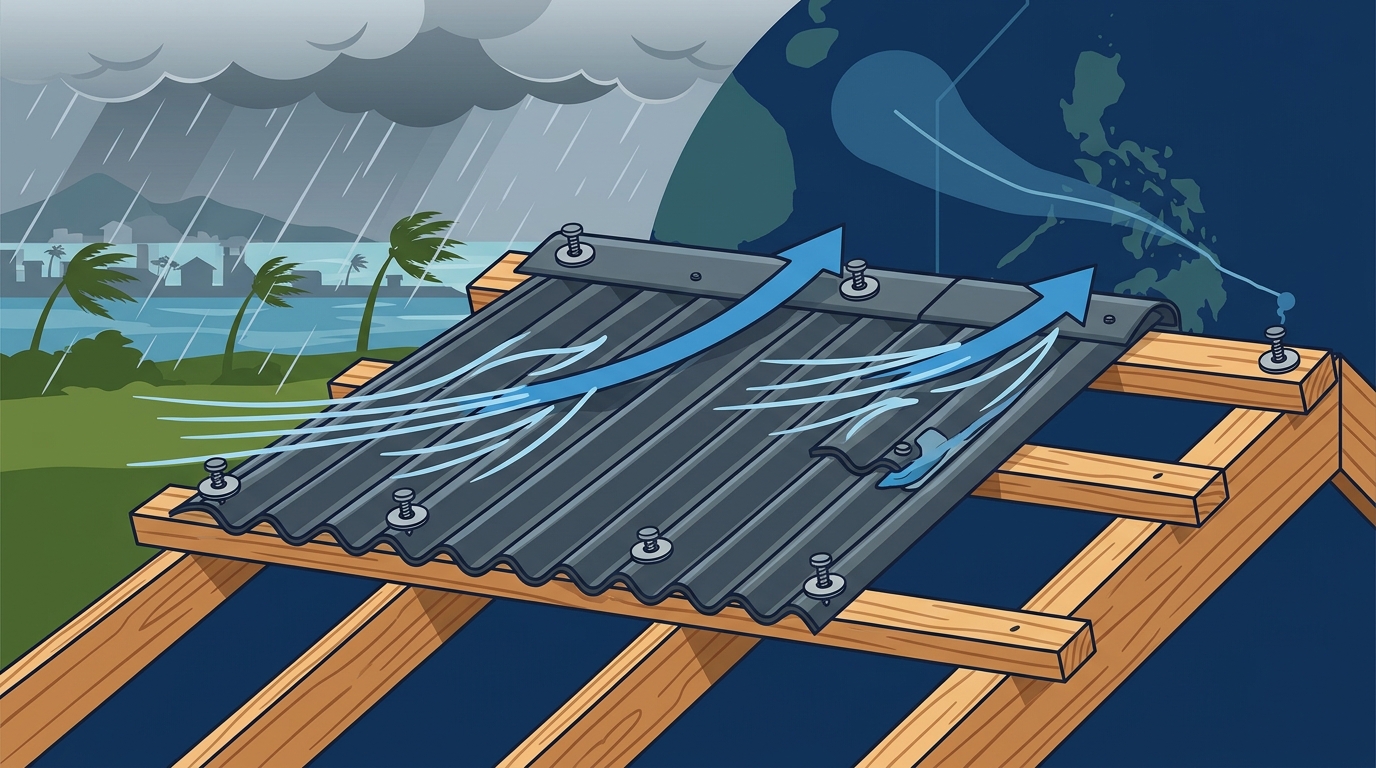
Wind resistance is not just about the material but how it interacts with the roof deck. In typhoon-prone regions, the primary failure mode is not the sheet ripping but the fasteners pulling through the material or the underlying purlins failing. Therefore, the installation must focus on distributing wind loads evenly across the entire roof surface. Research indicates that proper fastening can reduce wind uplift forces by up to 50 percent compared to standard installations. This is why adhering to strict spacing guidelines is non-negotiable for safety.
Preparation and Essential Tools
Successful installation begins with the right toolkit and a clean workspace. You will need specialized tools designed for bitumen sheets to ensure a secure and watertight seal. Using generic tools can lead to improper fastening or damage to the roofing material.
- Onduline Screws or Nails: Use only the recommended corrosion-resistant screws with EPDM washers. Standard nails lack the holding power and sealing capability required for typhoon zones.
- Power Drill with Torque Control: Essential for driving screws to the correct depth without over-tightening, which can crush the bitumen and compromise the seal.
- Utility Knife or Snips: For precise cutting of sheets around obstacles like chimneys or vents.
- Measuring Tape and Chalk Line: To ensure straight lines and consistent overlaps.
- Safety Gear: Harnesses, non-slip shoes, and gloves are mandatory when working on elevated surfaces.
Ensure your roof deck is clean, dry, and free of debris. Any irregularities in the underlying structure can create stress points that weaken the roof during high winds. If you are retrofitting an existing roof, inspect the purlins for rot or corrosion. Professional roofing repair services can help assess the structural integrity before new materials are installed.
Critical Purlin Spacing for Typhoon Zones
The spacing of the purlins (the horizontal supports) is the most critical factor in wind resistance. Standard residential spacing may not suffice in areas with extreme wind loads. For Onduline roofing in typhoon zones, the maximum purlin spacing should be reduced to ensure the sheets do not sag or flex excessively.
Typically, Onduline recommends a purlin spacing of 50 centimeters for standard applications. However, for high-wind areas in the Philippines, it is advisable to reduce this spacing to 30 to 40 centimeters. This closer spacing provides additional support points, reducing the span that the sheet must bridge during a storm. Reducing purlin spacing increases the number of fasteners per square meter, significantly enhancing wind uplift resistance.
Consult local building codes and structural engineers to determine the exact requirements for your specific location. The National Structural Code of the Philippines provides guidelines for wind load calculations based on geographic region. Adhering to these codes ensures that your roof meets the minimum safety standards for your area. For more information on structural requirements, visit the Philippine Weather Service for regional wind data.
Advanced Fastening Techniques
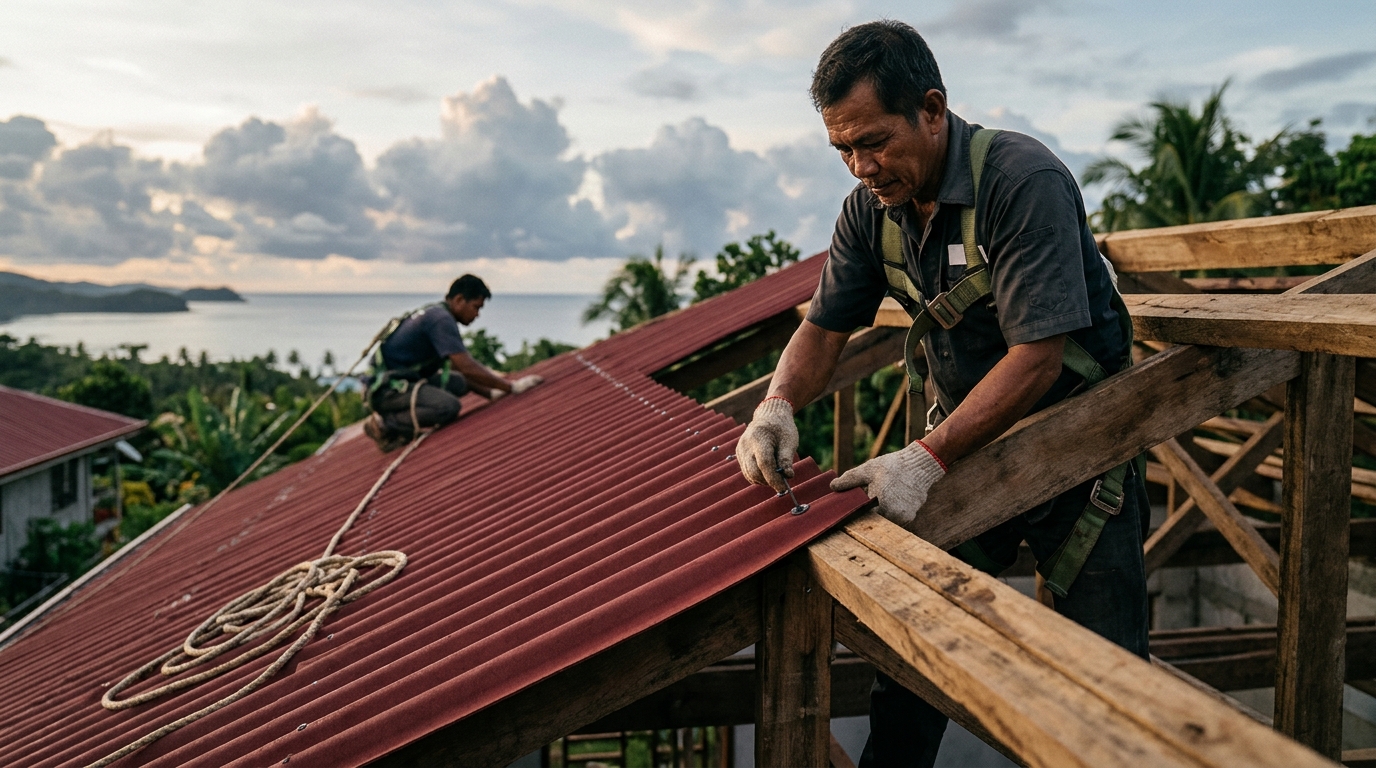
Fastening is the primary defense against wind uplift. The way you drive screws into the Onduline sheets determines the roof's ability to stay in place. Incorrect fastening can lead to leaks, loose sheets, and eventual failure during a typhoon.
Always drive screws into the crest (the highest point) of the corrugation. Driving screws into the valley (the lowest point) can lead to water pooling and increased pressure on the fastener. Use the correct screw length to penetrate the purlin by at least 25 millimeters. This ensures a secure grip on the underlying structure.
Do not overtighten the screws. The EPDM washer should be compressed evenly to form a seal, but excessive force can crush the bitumen, creating a gap that allows water and wind to penetrate. The screw head should be flush with the sheet surface, not protruding or recessed. Proper torque application is key to maintaining the integrity of the waterproof seal.
In high-wind zones, consider using additional fasteners at the edges and overlaps. This "edge reinforcement" strategy helps anchor the sheets more securely, preventing them from lifting at the perimeters where wind pressure is often highest. For complex roof geometries, custom roofing solutions may require specialized fastening patterns.
Overlap Patterns and Sealing Strategies
The overlap between sheets is another critical area for wind resistance. Insufficient overlap can allow wind to get underneath the sheets, causing them to peel back. Adequate overlap ensures that the sheets work together as a unified system.
For longitudinal overlaps (side laps), a minimum of one corrugation is typically required. However, in typhoon zones, increasing this to two corrugations provides additional security. For transverse overlaps (end laps), a minimum of 15 centimeters is recommended. In high-wind areas, increasing this to 20 centimeters or more is advisable.
Use high-quality roofing sealant at all overlaps and penetrations. Apply a bead of sealant under the overlap before placing the next sheet. This creates a continuous waterproof barrier and adds an extra layer of adhesion. Sealant application prevents wind-driven rain from infiltrating the roof structure.
Ensure that the overlaps are staggered to avoid creating continuous vertical seams. Staggering the overlaps distributes the wind load more evenly and prevents weak points along the roof. For detailed guidance on sealing techniques, refer to Onduline Philippines' official installation guidelines.
Ridge and Eave Detailing
The ridge (the peak of the roof) and the eaves (the edges) are particularly vulnerable to wind uplift. Proper detailing at these locations is essential for overall roof stability.
At the ridge, use a pre-formed ridge cap that matches the Onduline profile. Secure the ridge cap with screws at every corrugation, using sealant under the cap. This ensures that the ridge is firmly attached and does not act as a sail during high winds.
At the eaves, install a drip edge or flashing to direct water away from the roof edge. Secure the flashing with screws and sealant. This prevents water from seeping under the roof and causing rot in the underlying structure. Proper eave detailing protects the roof deck from moisture damage and wind-driven rain.
Consider installing wind straps or clips at the eaves and ridges for additional security. These metal components provide extra anchorage, helping to hold the roof in place during extreme weather events. For professional installation of these components, contact our team for expert assistance.
Key Takeaways
- Reduced Purlin Spacing: Decrease purlin spacing to 30-40 cm in typhoon zones to minimize sheet flexion and increase fastener density.
- Correct Fastening: Always drive screws into the crest of the corrugation with proper torque to ensure a secure, watertight seal.
- Enhanced Overlaps: Increase longitudinal and transverse overlaps to provide additional resistance against wind uplift.
- Sealant Application: Use high-quality sealant at all overlaps and penetrations to create a continuous waterproof barrier.
- Ridge and Eave Security: Secure ridge caps and eave flashings with additional fasteners and sealant to prevent lifting.
- Professional Assessment: Consult structural engineers to determine specific wind load requirements for your location.
- Regular Maintenance: Inspect and maintain the roof regularly to address any loose fasteners or damaged sealant before typhoon season.
Frequently Asked Questions
How often should I inspect my Onduline roof in typhoon-prone areas?
It is recommended to inspect your roof at least twice a year, ideally before and after the typhoon season. Look for loose fasteners, damaged sealant, or any signs of wear and tear. Early detection of issues can prevent major damage during storms.
Can Onduline roofing withstand Category 5 typhoons?
While Onduline is designed for durability, its performance in extreme winds depends on proper installation and structural support. With correct purlin spacing, fastening, and detailing, Onduline roofs can perform well in high-wind conditions. However, for extreme events, professional engineering advice is crucial.
What is the best type of screw for Onduline roofing?
Use corrosion-resistant screws with EPDM washers specifically designed for bitumen roofing. These screws provide the necessary holding power and create a watertight seal when installed correctly.
How do I prevent wind uplift on my roof?
Prevent wind uplift by using adequate purlin spacing, proper fastening techniques, and enhanced overlaps. Additionally, securing the ridge and eaves with additional fasteners and sealant can significantly reduce the risk of uplift.
Is it necessary to use sealant with Onduline roofing?
Yes, using sealant at all overlaps and penetrations is essential for creating a waterproof barrier and enhancing wind resistance. Sealant helps to prevent wind-driven rain from infiltrating the roof structure.
Can I install Onduline roofing over an existing roof?
Yes, Onduline can often be installed over existing roofs, provided the underlying structure is sound. However, it is important to consult with a professional to ensure that the existing roof can support the additional load and that proper ventilation is maintained.
What should I do if my roof is damaged during a typhoon?
If your roof is damaged, contact a professional roofing service immediately for assessment and repair. Delaying repairs can lead to further damage and increased costs. Emergency roofing repair services are available for urgent situations.
Secure Your Roof Today
Protecting your home from the devastating effects of typhoons requires more than just durable materials. It demands expert installation and meticulous attention to detail. At Tilcrest, we specialize in high-performance roofing solutions tailored for the Philippine climate. Our team of certified professionals ensures that every roof we install meets the highest standards of wind resistance and durability.
Do not wait for the next typhoon to assess your roof's safety. Contact us today to schedule a consultation and discover how our roofing solutions can safeguard your home. Visit our services page to learn more about our offerings.