
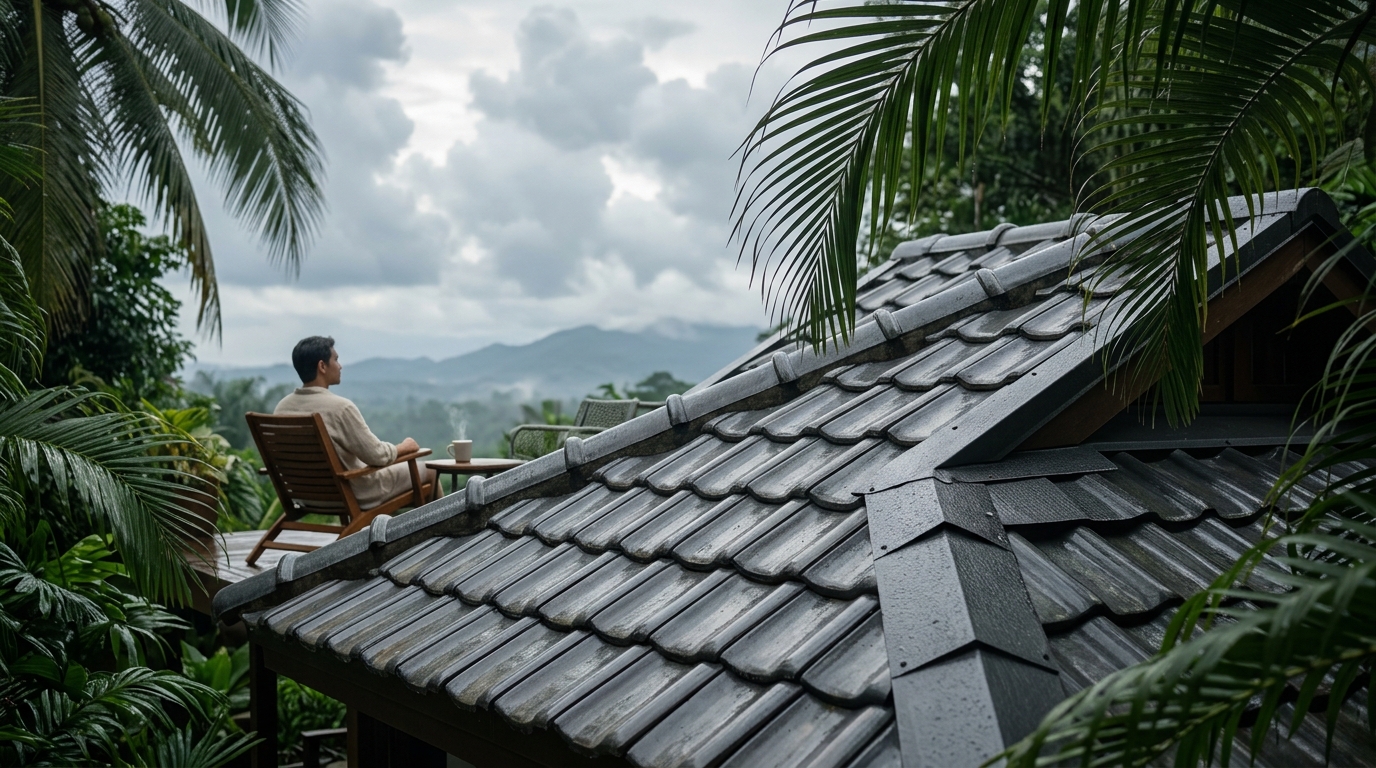
Tropical climates present a unique set of challenges for residential and commercial structures, where high humidity and intense rainfall accelerate material degradation. According to recent industry data, homes in high-humidity regions experience up to 40% faster deterioration of standard roofing components compared to arid zones. This accelerated wear makes selecting the right humidity-resistant roofing materials critical for long-term structural integrity. At Tilcrest Roofing Systems, we understand that a roof is not just a covering but a shield against the relentless elements of the Philippines and similar tropical environments. Choosing the wrong material can lead to mold growth, structural rot, and frequent, costly repairs.
Why Humidity Destroys Standard Roofs
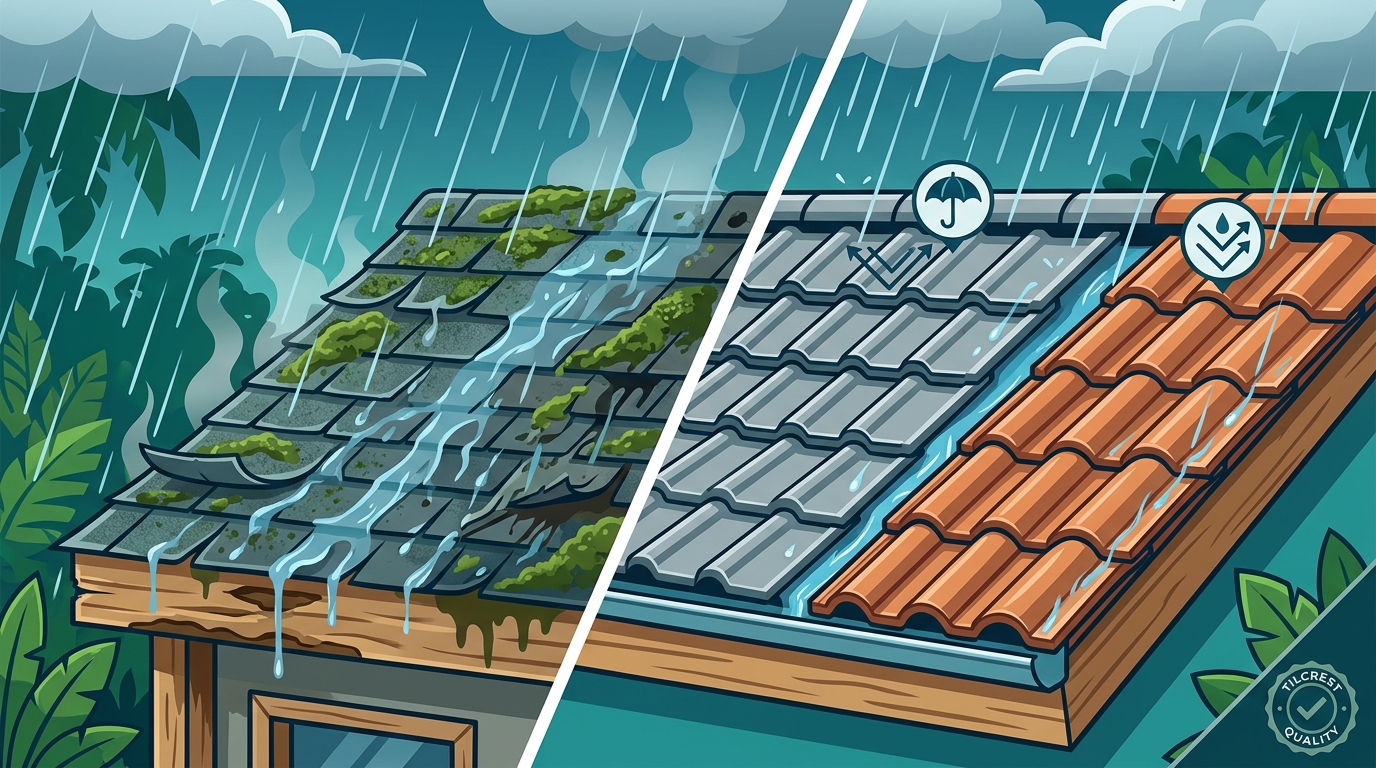
High humidity creates a microclimate within roofing layers that standard materials cannot withstand. Stone coated roofing is engineered to resist this, but understanding the mechanism is vital. Moisture permeates porous materials, leading to expansion, contraction, and eventual failure. In tropical regions, the combination of heat and moisture creates an ideal environment for algae, moss, and fungal growth. These organisms feed on organic binders in traditional asphalt shingles, causing them to become brittle and lose their granular protection.
Furthermore, thermal cycling in humid climates causes materials to expand during the day and contract at night. This constant movement weakens fasteners and seals, leading to leaks. A roof that fails to breathe properly traps moisture, resulting in rotting rafters and compromised insulation. This is why humidity-resistant roofing materials must be non-porous, UV-stable, and chemically inert to prevent biological growth.
Decra Stone-Coated Steel
Decra represents the pinnacle of humidity-resistant technology for tropical climates. Invented in 1957, Decra stone coated roofing combines the strength of steel with the aesthetic appeal of natural tiles. The core of each Decra sheet is a high-tensile steel substrate coated with aluminum-zinc alloy. This alloy acts as a sacrificial barrier, preventing rust and corrosion even in salt-heavy coastal areas.
The surface is glazed with natural stone granules. These granules provide UV protection, reflecting solar heat and reducing the thermal load on the building. This is crucial in tropical zones where heat gain can increase cooling costs by up to 30%. Decra stone coated roofing is also Class A fire-rated, offering an additional layer of safety. With a lifespan exceeding 70 years, it is a lifetime solution that resists mold and algae growth due to its non-porous surface.
Tsuruya Japanese Clay Tiles
For those seeking traditional aesthetics with modern durability, Tsuruya Japanese clay tiles offer a compelling option. Japanese clay tiles are fired at high temperatures, creating a vitrified surface that is virtually impermeable to water. This firing process eliminates the porosity found in lower-quality clay products, making them highly resistant to humidity-induced cracking.
Tsuruya tiles are designed to handle the thermal expansion and contraction typical of tropical weather. Their heavy weight provides excellent wind resistance, a critical factor in regions prone to typhoons. The material’s natural breathability allows moisture vapor to escape, preventing trapped humidity within the roof deck. Tsuruya attributes a significant market share in Japan, a country with diverse and harsh weather patterns, proving the reliability of their craftsmanship. These tiles maintain their color and structural integrity for decades, requiring minimal maintenance.
IKO Metal Shingles
IKO shingles, particularly their metal roofing lines, offer a versatile and cost-effective solution for humidity resistance. IKO shingles are engineered with advanced bitumen technology and reinforced with fiberglass mats. This construction provides dimensional stability, preventing the warping and curling that often plague standard asphalt shingles in humid conditions.
IKO’s metal shingles mimic the look of traditional materials while offering the durability of steel. They are coated with granules that reflect UV rays and resist impact from hail and debris. The interlocking design of IKO shingles creates a tight seal that prevents wind-driven rain from penetrating the roof deck. With a lifespan of 20 to 30 years, IKO shingles provide a balanced option for homeowners who need reliable humidity resistance without the premium cost of stone-coated steel or clay.
Material Comparison Matrix
Understanding the differences between these materials is essential for making an informed decision. The following table compares the key performance metrics of each option.
| Material Type | Humidity Resistance | Lifespan | UV Reflectivity | Wind Resistance | Best For |
|---|---|---|---|---|---|
| Decra Stone-Coated Steel | Excellent (Non-porous) | 70+ Years | High | Class 4 Impact | Coastal & High-Heat Zones |
| Tsuruya Clay Tiles | Very Good (Vitrified) | 50+ Years | Medium | High (Weight-based) | Traditional Aesthetics |
| IKO Metal Shingles | Good (Sealed System) | 20-30 Years | Medium-High | Class 3 Impact | Budget-Conscious Renovations |
Critical Installation Methods
Even the best humidity-resistant roofing materials will fail if installed incorrectly. Proper installation is the second most important factor in roof longevity, after material quality. In tropical climates, installation methods must prioritize ventilation and sealing.
Ventilation and Airflow
Adequate ventilation is non-negotiable in humid environments. Ridge vents, soffit vents, and gable vents work together to create a continuous airflow under the roof deck. This airflow removes heat and moisture vapor, preventing condensation buildup. Without proper ventilation, humidity can become trapped, leading to mold growth on the underside of the roof deck and rotting of wooden structural components.
Underlayment Selection
The underlayment acts as a secondary barrier against water intrusion. In high-humidity areas, synthetic underlayments are preferred over traditional asphalt-saturated felt. Synthetic underlayments are more resistant to tearing, have higher tensile strength, and do not absorb water. This ensures that if wind-driven rain penetrates the primary roofing layer, the underlayment will not degrade or promote rot.
Fastening and Sealing
Proper fastening techniques ensure that roofing materials remain secure during high winds. For Decra stone coated roofing, specialized screws with neoprene washers are used to create a watertight seal. For clay tiles, mechanical fasteners are often required in addition to mortar. IKO shingles require precise nailing patterns to prevent lifting. All seams and penetrations must be sealed with high-quality, UV-resistant sealants to prevent moisture ingress.
Key Takeaways
- Decra stone coated roofing offers the longest lifespan, exceeding 70 years, with superior resistance to rust and UV damage.
- Tsuruya clay tiles provide a vitrified, non-porous surface that naturally resists mold and algae growth in humid conditions.
- IKO shingles offer a cost-effective alternative with advanced bitumen technology for dimensional stability.
- Ventilation is critical in tropical climates to prevent condensation and moisture buildup under the roof deck.
- Synthetic underlayments are recommended over traditional felt for their superior water resistance and durability.
- Proper fastening techniques are essential to withstand high winds and prevent water intrusion at penetrations.
- Regular maintenance inspections can identify small issues before they become major leaks, saving significant repair costs.
Frequently Asked Questions
Which roofing material is best for high humidity?
Decra stone coated roofing is widely considered the best option for high humidity due to its non-porous surface and aluminum-zinc alloy coating, which prevents rust and mold growth.
How does humidity affect asphalt shingles?
High humidity can cause asphalt shingles to absorb moisture, leading to warping, curling, and the growth of algae and moss, which shortens their lifespan.
Do clay tiles require special maintenance in tropical climates?
Tsuruya clay tiles require minimal maintenance. Their vitrified surface resists water absorption, but regular inspections for moss or debris in the valleys are recommended.
Is ventilation important for metal roofs?
Yes, ventilation is crucial for metal roofs to prevent condensation buildup, which can lead to rust and structural rot if not properly managed.
How long do IKO shingles last in humid environments?
IKO shingles typically last 20 to 30 years in humid environments, provided they are installed correctly with proper underlayment and ventilation.
Can I install humidity-resistant roofing over my existing roof?
In some cases, yes, but it is generally recommended to remove the old roof to inspect the deck for rot and ensure proper ventilation and sealing.
What is the role of underlayment in humidity resistance?
Underlayment acts as a secondary water barrier. Synthetic underlayments are preferred in humid climates because they do not absorb water and resist tearing.
Contact Tilcrest for Premium Solutions
Choosing the right humidity-resistant roofing material is a critical investment in your home’s safety and value. At Tilcrest Roofing Systems, we provide expert guidance and premium products tailored to the unique challenges of tropical climates. Whether you choose Decra stone coated roofing, Tsuruya clay tiles, or IKO shingles, our team ensures professional installation and long-term performance. Contact us today to schedule a consultation and protect your home with the best roofing solutions available.