
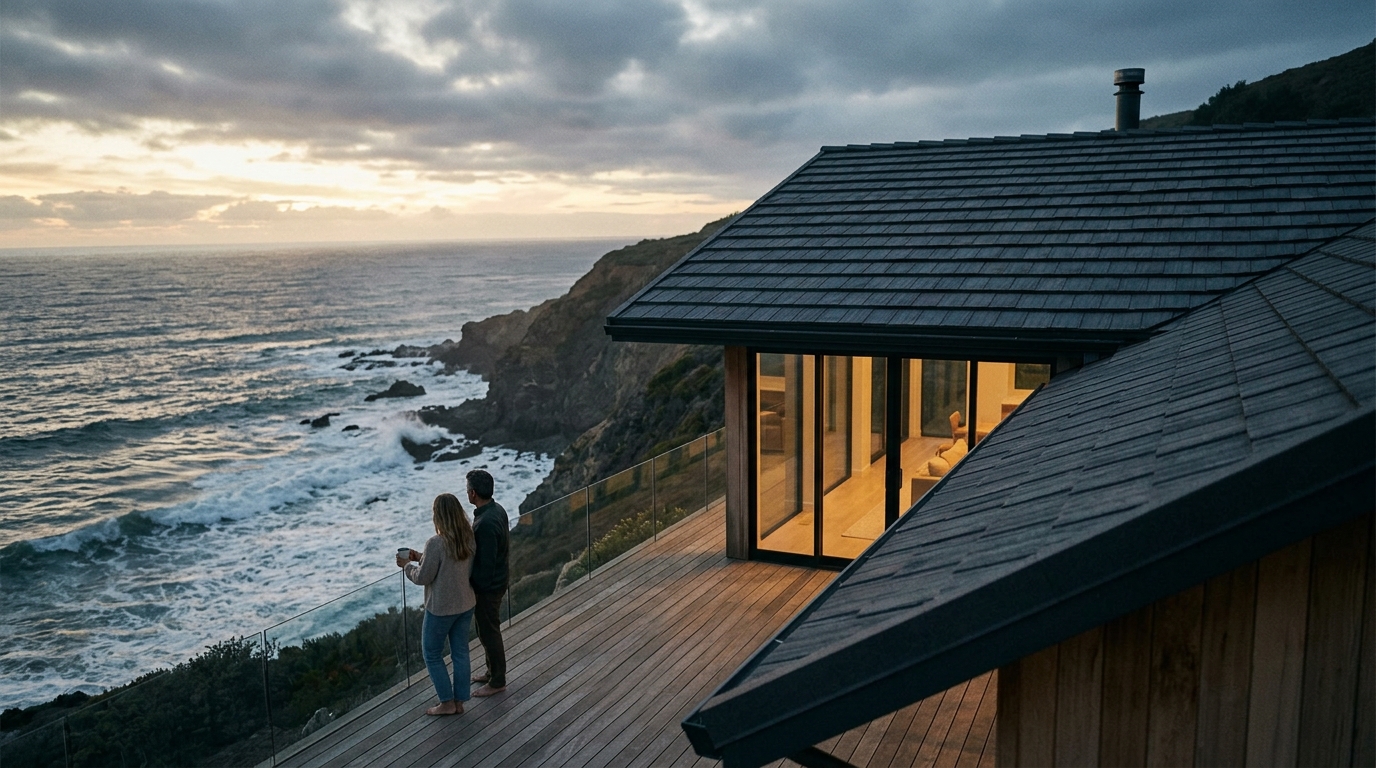
Coastal living offers unparalleled beauty, but the marine environment poses a severe threat to structural integrity. Salt spray accelerates corrosion, degrades organic materials, and compromises the longevity of standard roofing systems. According to industry data, homes within one mile of the coast experience corrosion rates up to 50 times higher than inland properties. This accelerated degradation means that standard roofing materials often fail prematurely, leading to costly replacements and structural damage. Selecting the right roofing system is not merely an aesthetic choice but a critical engineering decision for long-term home preservation. (Contact Us Tilcrest)
Why Salt Damages Standard Roofs
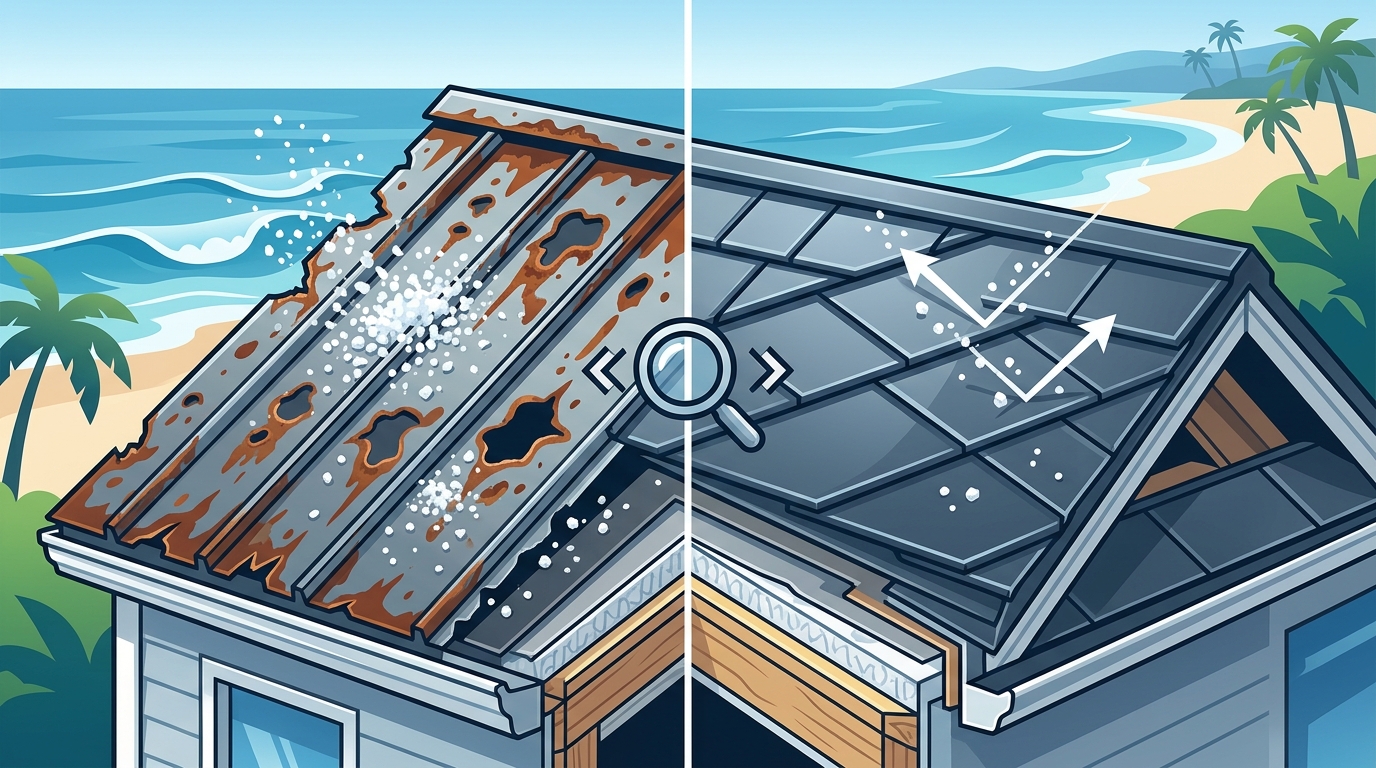
Understanding the mechanism of salt damage is the first step in protecting your home. Salt corrosion is an electrochemical process where chloride ions penetrate protective coatings, leading to rust and structural weakening. In coastal regions, wind carries salt-laden moisture directly onto roof surfaces. This constant exposure breaks down the binding agents in asphalt shingles and accelerates the oxidation of metal components. (Contact Us Tilcrest)
Standard galvanized steel, while common in inland construction, lacks the necessary alloy composition to withstand marine-grade corrosion. Without proper protection, these roofs can develop pinhole leaks within five to ten years. Prioritizing roof maintenance is essential, but prevention through material selection is far more effective than reactive repairs. The goal is to choose materials that inherently resist chloride attack or possess robust protective layers that prevent salt penetration. (About Us Tilcrest)
Best Salt-Resistant Roofing Materials
Not all roofing materials perform equally in coastal environments. The ideal salt-resistant roof must balance corrosion resistance, wind uplift capability, and aesthetic durability. Three primary categories emerge as the top contenders for coastal homes: stone-coated steel, ceramic clay tiles, and specialized metal alloys. Each offers distinct advantages in terms of lifespan, maintenance requirements, and visual appeal. Tilcrest Roofing Systems curates a portfolio of international brands specifically selected for their ability to withstand these harsh conditions.
When evaluating options, consider the performance forward approach Tilcrest advocates. This means looking beyond initial cost to the total cost of ownership, including maintenance, energy efficiency, and replacement frequency. Premium materials often have a higher upfront cost but deliver superior protection against the elements, ensuring the roof remains a reliable barrier for decades.
Decra Stone Coated Steel
Decra stone-coated steel roofing is widely recognized as a premier solution for coastal environments. Invented in 1957, Decra pioneered this technology to combine the strength of steel with the aesthetic versatility of traditional roofing. The core of a Decra sheet is a high-tensile steel substrate coated with aluminum-zinc alloy. This alloy coating provides exceptional sacrificial protection against corrosion, outperforming standard galvanized steel in salt spray tests.
The surface is then glazed with natural stone granules. These granules serve two critical functions: they protect the underlying coating from UV degradation and provide a dense, non-porous barrier against salt moisture. Decra Stone Coated Roofing is engineered to resist wind uplift, a crucial feature in coastal areas prone to storms and typhoons. With a lifespan of up to 70 years, it offers a lifetime solution that maintains its color and structural integrity despite constant exposure to salt air.
As the official Philippine distributor, Tilcrest ensures that Decra products meet local climate demands. The material’s Class A fire resistance and high wind rating make it a safe and durable choice for homes near the ocean. Its lightweight nature also reduces the structural load on the home, which is beneficial for older coastal properties.
Tsuruya Japanese Clay Tiles
For homeowners seeking a traditional aesthetic with modern durability, Tsuruya Japanese clay tiles are an exceptional choice. Clay is an inert material, meaning it does not corrode or rust when exposed to salt. This inherent resistance makes it one of the most durable roofing options for coastal climates. Tsuruya utilizes advanced firing techniques to create tiles that are dense, non-porous, and highly resistant to weathering.
Tsuruya attributes a significant production capacity to meeting the demands of harsh environments, ensuring consistency in quality. The tiles are available in both traditional and modern designs, allowing for architectural flexibility. Unlike metal roofs, clay tiles do not suffer from galvanic corrosion, making them a passive but highly effective defense against salt spray.
However, clay tiles are heavier than metal alternatives. Proper structural support is required during installation. Tilcrest Roofing Systems provides expert guidance on structural requirements to ensure that the beauty of Tsuruya tiles is matched by their secure installation. The longevity of clay tiles often exceeds 50 years, with many historic coastal homes retaining their original clay roofs for over a century.
IKO Metals and Shingles
IKO Metals offers a range of roofing solutions that include specialized metal products and high-performance shingles. IKO’s expertise spans over 50 years, focusing on materials that can withstand diverse weather conditions. For coastal homes, IKO’s metal roofing options often feature advanced coating technologies designed to resist corrosion.
IKO shingles, particularly those designed for high-wind and impact resistance, can also be suitable for coastal areas if they feature robust granule adhesion and waterproofing layers. The versatility of IKO products allows for a wide range of styles, from modern flat profiles to traditional shingle looks. Proper installation is key to maximizing the lifespan of IKO products in salt-heavy environments.
Tilcrest partners with IKO to bring these reliable, weather-resistant options to the Philippine market. By combining IKO’s material science with Tilcrest’s local expertise, homeowners can access roofing systems that balance cost-effectiveness with coastal durability. Regular inspections, as discussed in our guide on roofing warranty, can help identify any potential issues early, ensuring the roof continues to perform as intended.
Material Comparison Matrix
The following table compares the key attributes of the primary salt-resistant roofing options available through Tilcrest. This comparison helps homeowners make informed decisions based on their specific priorities, such as lifespan, weight, and aesthetic preference.
| Material Type | Corrosion Resistance | Lifespan | Weight | Best For |
|---|---|---|---|---|
| Decra Stone Coated Steel | High (Aluminum-Zinc Alloy) | Up to 70 Years | Lightweight | Storm-prone coastal areas |
| Tsuruya Clay Tiles | Excellent (Inert Material) | 50+ Years | Heavy | Traditional aesthetics, long-term durability |
| IKO Metals/Shingles | Good to High (Depends on Coating) | 20-30 Years (Shingles), 40+ (Metal) | Moderate | Budget-conscious coastal homes |
Key Takeaways
- Corrosion is the primary threat: Salt spray accelerates metal degradation, making material selection critical for coastal homes.
- Decra offers superior protection: Its aluminum-zinc alloy coating and stone granule surface provide exceptional resistance to salt and wind.
- Clay is inert and durable: Tsuruya clay tiles do not corrode, offering a timeless aesthetic with long-term structural integrity.
- IKO provides versatile options: IKO’s range includes both metal and shingle solutions suitable for various coastal budgets and styles.
- Professional installation is vital: Even the best materials require expert installation to maximize their salt-resistant properties.
- Regular maintenance extends lifespan: Routine inspections can catch minor issues before they become major leaks or structural problems.
- Tilcrest is the trusted partner: With a 65+ year legacy, Tilcrest provides premium roofing brands tailored to the Philippine climate.
Frequently Asked Questions
What is the best roofing material for coastal homes?
Decra stone-coated steel is often considered the best overall choice due to its high corrosion resistance, wind uplift capability, and lightweight nature. However, Tsuruya clay tiles are also excellent for their inert properties and aesthetic appeal.
How does salt damage affect metal roofs?
Salt accelerates the oxidation process in metal, leading to rust and structural weakening. Materials with aluminum-zinc alloy coatings, like Decra, offer superior protection compared to standard galvanized steel.
Can I install clay tiles on any home?
Clay tiles are heavy and require a strong structural foundation. A professional assessment is necessary to ensure the home’s frame can support the weight of Tsuruya clay tiles.
How long do salt-resistant roofs last?
Premium salt-resistant roofs, such as Decra and Tsuruya, can last 50 to 70 years or more with proper maintenance. Standard materials may fail in 10-15 years in coastal environments.
Is regular maintenance required for coastal roofs?
Yes, regular inspections are crucial to remove salt buildup and check for any signs of wear or damage. This helps maintain the roof’s integrity and extends its lifespan.
What is the difference between stone-coated steel and regular metal roofing?
Stone-coated steel features a layer of natural stone granules that protect the underlying metal from UV rays and physical damage, offering better aesthetics and durability than bare metal.
Does Tilcrest offer warranty coverage for coastal installations?
Tilcrest partners with brands that offer robust warranties. It is important to review the specific warranty terms for each product, as coverage may vary based on installation quality and maintenance.
How do I choose between Decra and IKO for my home?
Decra is ideal for maximum durability and storm resistance, while IKO offers a wider range of styles and price points. Consult with Tilcrest experts to determine the best fit for your budget and aesthetic preferences.
Contact Tilcrest for Expert Advice
Protecting your coastal home requires more than just choosing the right material; it demands expert guidance on installation and maintenance. Tilcrest Roofing Systems is committed to providing high-quality roofing solutions that withstand the test of time and the elements. Our team of experts can help you select the perfect roofing system for your specific needs, ensuring your home remains safe and beautiful for decades to come.
Do not wait for salt damage to compromise your home’s integrity. Contact Tilcrest today to schedule a consultation and explore our premium roofing options. Visit our contact page to get in touch with our team and start your journey towards a more durable, salt-resistant roof.