
Protect Your Roof from High Humidity Damage: A Step-by-Step Guide
High humidity is a silent destroyer of roofing systems, particularly in tropical climates like the Philippines where moisture levels remain consistently elevated. According to industry data, homes in high-humidity regions experience up to 40% faster degradation of roofing materials due to constant moisture absorption and thermal cycling. This guide provides a comprehensive, actionable framework to safeguard your property against the insidious effects of dampness, mold, and structural decay. By following these precise steps, you can extend the lifespan of your roof and maintain the integrity of your home’s envelope.
Understanding Humidity Damage Mechanisms
Before implementing protective measures, it is critical to understand how humidity attacks roofing structures. Condensation is the process where water vapor in the air turns into liquid water upon contact with cooler surfaces. In roofing, this often occurs in the attic space or beneath metal sheets, leading to hidden rot and mold growth. Unlike rain, which is visible and temporary, humidity is a constant, pervasive force that exploits microscopic cracks and gaps.
High humidity accelerates the breakdown of organic materials. For instance, wooden trusses and sheathing are particularly vulnerable to fungal growth when moisture content exceeds 20%. Furthermore, metal roofing, while durable, can suffer from accelerated corrosion if the protective coatings are compromised by constant moisture exposure. Understanding these mechanisms allows homeowners to target their efforts effectively.
Step 1: The Comprehensive Inspection Protocol
The first line of defense is a rigorous inspection. Do not rely on visual checks from the ground. You must conduct a thorough examination of both the exterior and interior of your roofing system.
Exterior Assessment
Start by examining the roof surface for signs of wear. Look for cracked, curled, or missing shingles. For tile roofs, check for hairline fractures that can allow water ingress. Inspect the flashing around chimneys, vents, and skylights, as these are common failure points where humidity can penetrate the roof deck. Regular inspections catch issues early, preventing minor defects from becoming major structural problems.
Interior and Attic Check
Enter your attic with a bright flashlight. Look for any signs of daylight penetrating through the roof deck. Check the underside of the roof sheathing for dark stains, which indicate active leaks or chronic condensation. Inspect the insulation for dampness or mold. If the insulation feels wet or smells musty, it has absorbed significant moisture, reducing its R-value and promoting rot in the underlying wood.
Step 2: Strategic Cleaning and Debris Removal
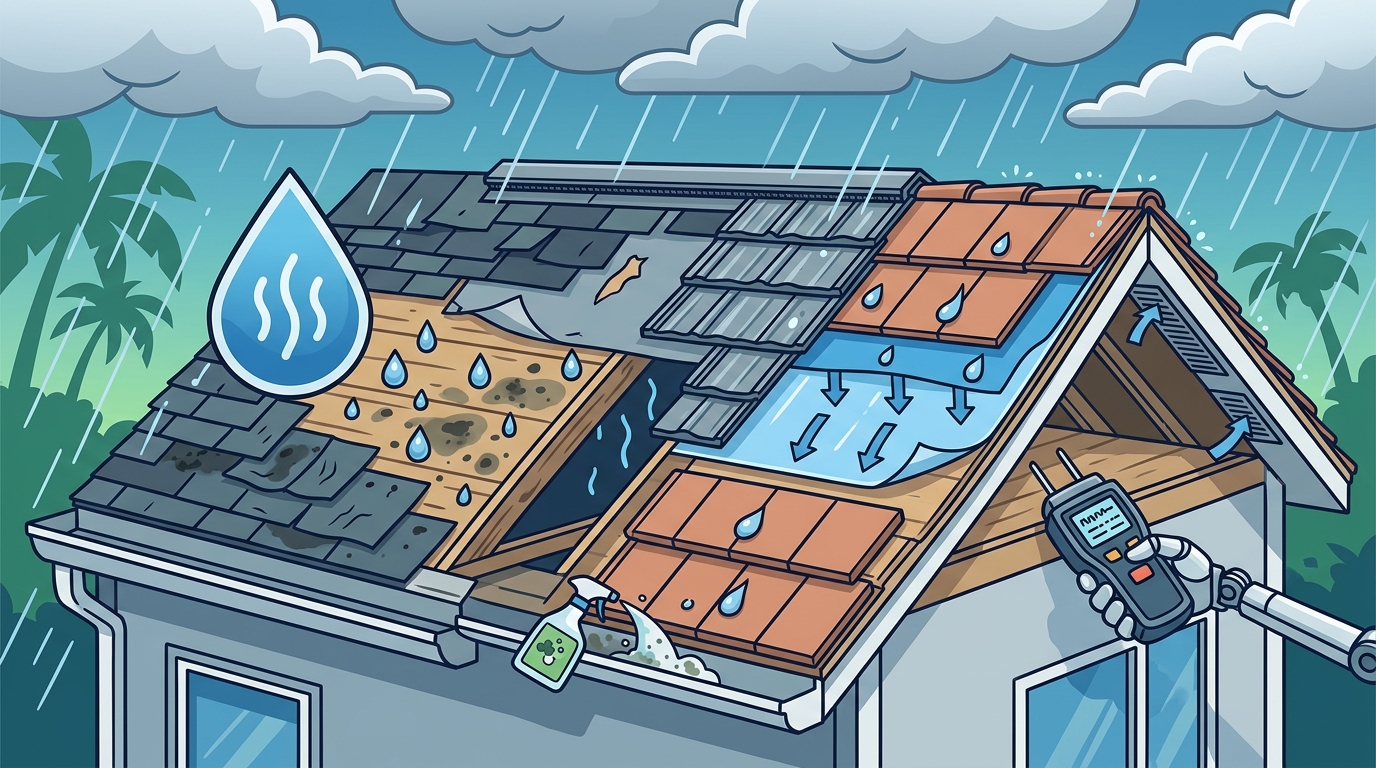
Debris acts as a sponge, holding moisture against the roof surface and prolonging wetness. This is particularly damaging in high-humidity environments where evaporation rates are slow.
Gutter and Downspout Clearance
Clean your gutters and downspouts at least twice a year. Clogged gutters cause water to back up under the roof edge, leading to rot in the fascia and soffit. Ensure downspouts direct water at least five feet away from your home’s foundation to prevent ground saturation, which can wick moisture back up into the structure.
Roof Surface Debris
Remove leaves, branches, and moss from the roof surface. Moss thrives in humid conditions and can lift shingles or tiles, creating pathways for water. For metal roofs, remove any accumulated debris that might trap moisture against the coating. Investing in premium grade materials often includes coatings that resist moss and algae growth, but regular cleaning is still essential.
Step 3: Sealing and Ventilation Optimization
Proper ventilation is the most effective tool against humidity damage. It allows moist air to escape the attic, preventing condensation on the underside of the roof deck.
Ventilation Systems
Ensure your attic has a balanced ventilation system with intake vents (typically at the soffit) and exhaust vents (at the ridge or gables). The airflow should be sufficient to exchange the entire volume of air in the attic every 15 to 30 minutes. If your attic feels hot and stuffy, your ventilation is inadequate. Save on energy bills by ensuring your roof is properly ventilated, as this reduces the load on your cooling systems.
Sealing Penetrations
Inspect all penetrations, such as plumbing vents and electrical conduits, for gaps in the sealant. Reapply high-quality, UV-resistant sealant where necessary. Even small gaps can allow humid air to enter the attic, leading to condensation on cold surfaces.
Step 4: Material Selection for Humid Climates
If you are planning a roof replacement or new construction, selecting the right materials is crucial for long-term durability in high-humidity environments.
Stone-Coated Metal Roofing
Stone-coated metal roofing, such as Decra, offers exceptional resistance to humidity and corrosion. The stone granules provide a protective layer that shields the metal from UV rays and moisture. Decra roofing is known for its durability and ability to withstand harsh weather conditions, making it an ideal choice for the Philippines. Decra Stone Coated Roofing boasts a lifespan of up to 70 years, offering a lifetime solution that you can even pass to your children.
Clay and Concrete Tiles
Clay tiles, such as those from Tsuruya, are naturally resistant to moisture and do not rot or corrode. They are heavy, which requires a strong structural support, but they offer superior longevity and aesthetic appeal. Tsuruya Japanese Clay Tiles are available in both traditional and modern designs, opening up all design styles for the Asian and Western structures.
Asphalt Shingles
While asphalt shingles are common, they are more susceptible to humidity damage than metal or tile. Ensure you choose high-quality, algae-resistant shingles with robust granule coverage. Iko Shingles stands out from the rest with more than 50 years of expertise on the material and high quality bitumen roof shingles, that offer a tough and robust material for all kinds of weather disturbances.
Step 5: Establishing a Proactive Maintenance Schedule
Maintenance is not a one-time event but a continuous process. Create a schedule that aligns with your local climate patterns.
Seasonal Checks
Conduct a detailed inspection before and after the rainy season. Check for any new leaks, damaged flashing, or clogged gutters. Trim overhanging branches to prevent debris accumulation and physical damage to the roof.
Professional Inspections
Schedule a professional roof inspection every three to five years. Professionals can identify subtle signs of wear and tear that homeowners might miss. TILCREST Roofing Systems is committed to providing high-quality roofing through brands trusted for more than 80 years, ensuring you have access to expert advice and premium materials.
Key Takeaways
- Humidity Accelerates Degradation: High humidity can increase roofing material degradation by up to 40% due to constant moisture absorption.
- Ventilation is Critical: Proper attic ventilation prevents condensation, which is a primary cause of hidden roof rot.
- Material Choice Matters: Stone-coated metal and clay tiles offer superior resistance to humidity compared to standard asphalt shingles.
- Regular Cleaning Prevents Moss: Debris removal stops moisture retention, preventing moss and algae growth that can damage roof surfaces.
- Decra’s Longevity: Decra stone-coated roofing offers a lifespan of up to 70 years, providing long-term protection against the elements.
- Tsuruya’s Durability: Tsuruya Japanese clay tiles are crafted to withstand harsh environmental conditions, offering exceptional durability.
- Professional Support: Partnering with trusted distributors like Tilcrest ensures access to premium materials and expert installation guidance.
Frequently Asked Questions
How does high humidity specifically damage a roof?
High humidity leads to condensation in the attic, which can rot wooden structures and promote mold growth. It also accelerates the corrosion of metal components and the degradation of organic materials like wood and asphalt.
What is the best roofing material for humid climates?
Stone-coated metal roofing and clay tiles are generally the best options for humid climates due to their resistance to moisture, mold, and corrosion. Decra Stone Coated Roofing is a top choice for its durability and weather resistance.
How often should I inspect my roof for humidity damage?
You should inspect your roof at least twice a year, ideally before and after the rainy season. Regular inspections help catch small issues before they become major problems.
Can I prevent mold growth on my roof?
Yes, by ensuring proper ventilation, keeping the roof clean of debris, and using algae-resistant materials. Regular care today ensures safety, savings, and comfort for years to come.
What role does attic ventilation play in humidity control?
Attic ventilation allows moist air to escape, preventing it from condensing on the cooler underside of the roof deck. This reduces the risk of rot and mold growth in the attic space.
Are there specific brands recommended for humid regions?
Brands like Decra, Tsuruya, and IKO Metals are recommended for their durability and resistance to harsh weather conditions. Tilcrest Roofing Systems is your partner for premium roofing options in the Philippines.
How long do stone-coated metal roofs last in humid areas?
Stone-coated metal roofs, such as those from Decra, can last up to 70 years even in humid environments, provided they are properly installed and maintained.
Secure Your Roof Today
Protecting your roof from high humidity damage requires a proactive approach, combining regular maintenance, proper ventilation, and high-quality materials. By following this step-by-step guide, you can ensure your home remains safe, comfortable, and structurally sound for decades to come. Contact Tilcrest Roofing Systems today to discuss your roofing needs and explore our premium range of Decra, Tsuruya, and IKO Metals products. Visit our About Us page to learn more about our commitment to quality and craftsmanship.