

Step-by-Step Installation Guide for Stone-Coated Steel Roofing Panels
Stone-coated steel roofing has become the premier choice for modern construction in the Philippines, offering a lifespan of up to 70 years when installed correctly. Decra roofing systems are engineered to withstand the country's torrential downpours and scorching heat, but their longevity depends entirely on precise installation techniques. This guide outlines the critical steps to ensure your roof delivers both aesthetic appeal and structural integrity for decades.
Preparation and Material Inspection
Before any physical work begins, the foundation of a successful installation lies in thorough preparation. Stone-coated steel panels are heavy-duty materials that require a robust structural base. Tilcrest Roofing Systems emphasizes that the first step is verifying the structural integrity of your roof deck. Ensure that the purlins or decking are level, clean, and free of rot or corrosion.
Inspect all materials upon delivery. Stone-coated steel panels, such as those from Decra, are coated with aluminum-zinc alloy and natural stone granules. Check for any transit damage to the granule coating, as exposed steel can lead to premature rusting. Verify that all necessary accessories, including ridge caps, hip tiles, and specialized fasteners, are present and match the panel profile.
Underlayment and Flashing Installation
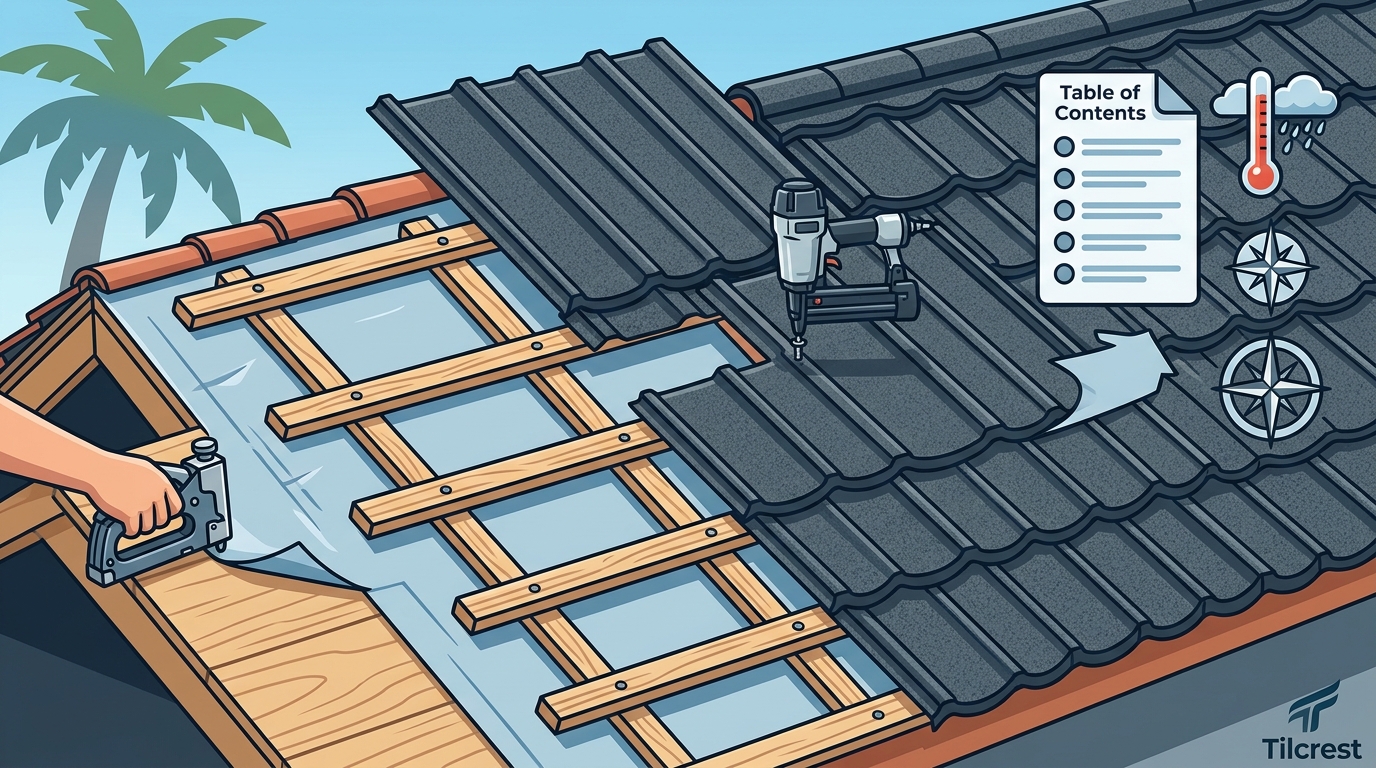
The underlayment acts as the secondary water barrier and is critical for preventing condensation. In the Philippines' humid climate, a high-quality synthetic underlayment is recommended over traditional felt paper due to its superior tear resistance and moisture permeability. Proper insulation and underlayment work together to keep cool air in during summer and warmth inside during winter, directly impacting energy efficiency.
Install flashing at all critical junctions before laying the main panels. This includes:
- Drip Edges: Install along the eaves and rakes to direct water away from the fascia.
- Valley Flashing: Use wide, continuous metal flashing in open or closed valleys to handle high water volume.
- Wall Flashing: Ensure vertical intersections are sealed with step flashing or counter-flashing to prevent wind-driven rain intrusion.
Panel Placement and Alignment
Stone-coated steel panels are designed to interlock, creating a continuous, monolithic shield against the elements. Begin installation at the eave, ensuring the first panel is perfectly level. Even a slight misalignment at the start will compound as you move up the roof, leading to gaps and aesthetic issues.
When placing subsequent panels, engage the interlocking mechanism firmly. The panels should sit flush against the underlayment without excessive tension. For Decra stone-coated roofing, the unique profile allows for flexibility, but it must be handled with care to avoid bending the steel substrate. Use temporary clips or weights to hold panels in place while you work your way up to the ridge.
Fastening and Sealing Protocols
Fastening is the most critical technical aspect of stone-coated steel installation. Incorrect fastener placement can lead to leaks and panel failure. Use only the manufacturer-specified screws with neoprene or EPDM washers that are compatible with the stone-coated finish.
Follow these fastening rules strictly:
- Location: Drive screws into the flat portion of the panel, never into the raised ribs or interlocking edges, unless specified by the manufacturer.
- Depth: The washer must be compressed firmly against the panel surface but not over-tightened. Over-tightening can crush the washer, leading to water ingress.
- Spacing: Adhere to the recommended spacing, typically every 12 to 18 inches along the purlins, depending on local wind load requirements.
For high-wind regions, consider using additional fasteners at the edges and corners. The Tilcrest portfolio ensures that all components are tested for wind resistance, but the installer must ensure every point is secured.
Trim, Ridge, and Valley Finishing
Once the main field panels are installed, the focus shifts to the trim work. The ridge cap is the final piece of the puzzle, sealing the peak of the roof. Install ridge caps with a slight overlap to prevent water from backing up under the cap during heavy rains.
For valleys, you can choose between an open valley, where the metal flashing is exposed, or a closed valley, where the panels are woven together. Closed valleys are often preferred in tropical climates for their debris-shedding capabilities. Ensure that all trim pieces are securely fastened and sealed with a high-quality, UV-resistant sealant compatible with stone-coated finishes.
Post-Installation Maintenance
A stone-coated steel roof is virtually maintenance-free, but periodic inspections are necessary to preserve its warranty and performance. Regular inspections can catch small problems before they become big ones, such as loose fasteners or displaced granules.
After installation, clean the roof surface to remove any metal filings or debris from the cutting process. These particles can rust and stain the stone coating if left untreated. Use a soft brush and mild detergent, avoiding abrasive tools that could damage the granule layer. For long-term care, roof warranty terms often require annual professional checks to maintain coverage validity.
Key Takeaways
- Decra Innovation: Decra invented stone-coated roofing in 1957, pioneering the blend of steel strength and aesthetic tile appeal.
- Lifespan: Properly installed stone-coated steel roofs can last up to 70 years, offering a lifetime solution for homeowners.
- Fastener Precision: Screws must be driven into the flat portion of the panel with correct washer compression to prevent leaks.
- Underlayment Role: Synthetic underlayments provide superior moisture management in the Philippines' humid climate compared to traditional felt.
- Wind Resistance: The interlocking design of stone-coated panels provides exceptional wind uplift resistance, crucial for typhoon-prone regions.
- Granule Protection: Avoid abrasive cleaning to preserve the stone granule coating, which protects the steel from UV and corrosion.
- Professional Installation: Due to the specialized fastening and flashing requirements, professional installation is recommended to ensure warranty validity.
Frequently Asked Questions
Can stone-coated steel roofing be installed over existing shingles?
While it is technically possible to install stone-coated steel over existing asphalt shingles, it is generally not recommended. The added weight and the need for a perfectly flat surface make it better to remove the old roof to ensure proper ventilation and structural integrity.
How does stone-coated steel compare to traditional clay tiles?
Stone-coated steel is significantly lighter than clay tiles, reducing the load on your roof structure. It also offers superior impact resistance and is less prone to cracking during extreme weather events compared to brittle clay materials.
What is the typical lifespan of Decra stone-coated roofing?
Decra stone-coated roofing is designed to last up to 70 years. This longevity is due to the aluminum-zinc alloy coating and the protective stone granule layer, which prevent rust and UV degradation.
Is stone-coated steel noisy during rain?
No. When installed with a solid deck and proper underlayment, stone-coated steel roofing is virtually silent during rain. The stone granules and the steel substrate dampen sound, making it comparable to tile or shingle noise levels.
How often should I inspect my stone-coated steel roof?
It is advisable to inspect your roof at least once a year, preferably before the rainy season. Look for loose fasteners, displaced panels, or any signs of granule loss, and address them immediately to maintain warranty coverage.
Ready to Protect Your Home?
Installing stone-coated steel roofing is a significant investment in your home's future. By following these steps and partnering with a trusted distributor, you ensure your roof stands the test of time. Contact Tilcrest Roofing Systems today to discuss your project and get expert guidance on the best materials for your specific needs.