
Which Roofing Supplier in the Philippines Carries Materials Rated for Typhoon Conditions?
Metal Roofing Systems
The Decra Advantage
Tsuruya and IKO Metals
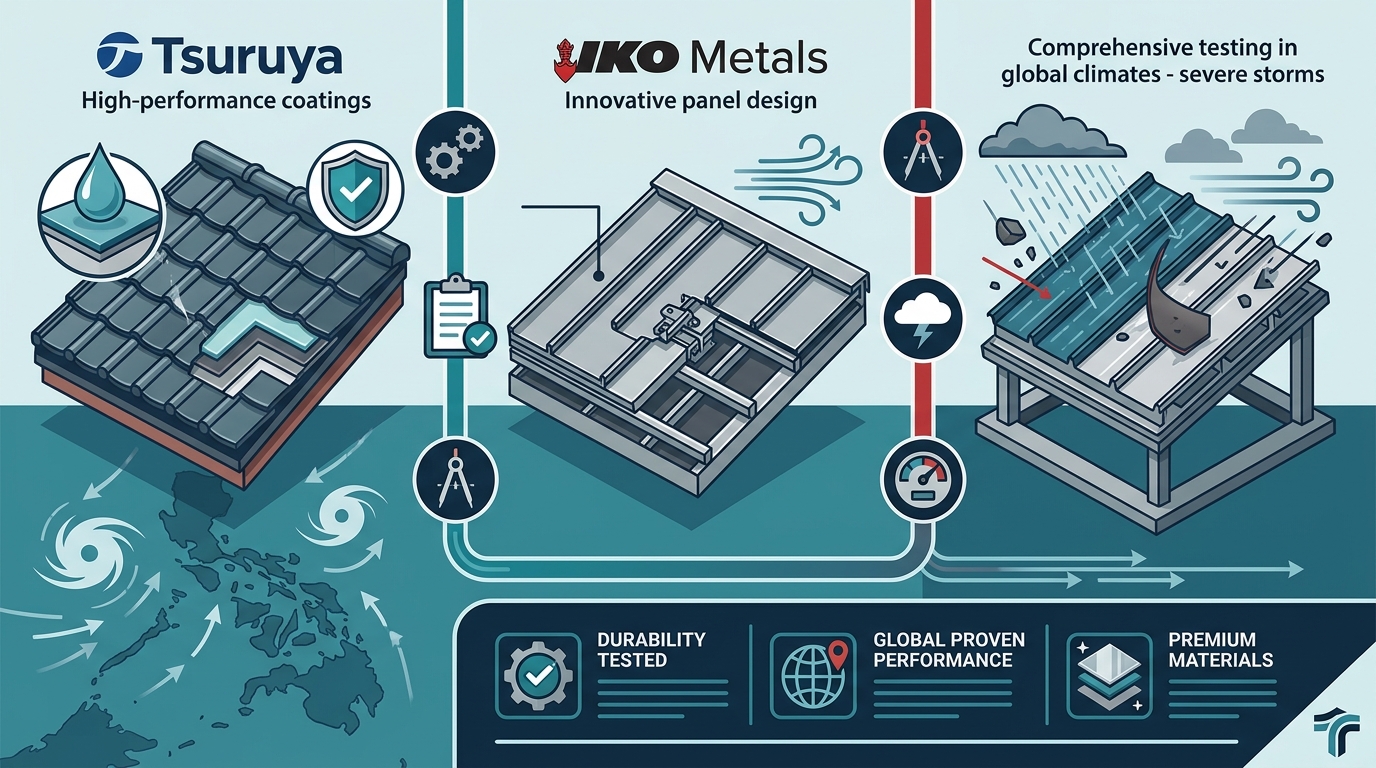
Tilcrest also represents Tsuruya and IKO Metals, brands that bring decades of engineering expertise to the Philippine market. Tsuruya is known for its high-performance coatings and durability, while IKO Metals focuses on innovative panel designs that enhance both aesthetics and structural performance. By carrying these specific brands, Tilcrest ensures that customers have access to materials that have been tested and proven in various global climates, including those with severe storm activity. For additional details, review the .
The choice of supplier matters because not all metal roofing is created equal. A supplier like Tilcrest, with its focus on premium brands, ensures that the materials you purchase meet specific international standards for durability. This is vital when you are investing in a roof that must last for decades while withstanding the annual typhoon season. For additional details, review the Customer Experience.
Wind Resistance Ratings
Understanding how a roof performs in high winds requires looking at specific engineering metrics. Wind resistance rating is a classification that indicates the maximum wind speed a roofing system can withstand without failure, typically measured in miles per hour (mph) or kilometers per hour (km/h). In the context of the Philippines, where typhoons can generate sustained winds exceeding 185 km/h, a high wind rating is not a luxury; it is a necessity. For additional details, review the Frequently Asked Questions.
Understanding Uplift Forces
Wind does not just push against a roof; it creates uplift forces that try to lift the material off the structure. The rating of a roofing system is determined by its ability to resist these uplift forces. Metal roofing systems from Tilcrest, such as those from Decra and IKO Metals, are designed with specific fastening patterns and panel interlocks that maximize resistance to uplift. This engineering ensures that even in extreme conditions, the roof remains securely attached to the building frame. For additional details, review the About.
Comparing Performance Metrics
To help you understand the differences between various roofing options, the table below compares the general characteristics of metal roofing systems versus traditional materials in the context of typhoon resistance.
| Roofing Type | Wind Resistance Mechanism | Typical Application in Typhoon Zones | Supplier Availability via Tilcrest |
|---|---|---|---|
| Standing Seam Metal | Mechanical fasteners and interlocking panels | High; excellent for sustained high winds | Yes (Decra, IKO Metals) |
| Corrugated Metal | Overlapping panels and screw fastening | Medium to High; depends on fastener quality | Yes (Tsuruya, IKO Metals) |
| Clay Tiles | Gravity and mortar (limited) | Low; prone to dislodgement in high winds | No |
| Asphalt Shingles | Adhesive and mechanical nails | Low to Medium; vulnerable to uplift | No |
Key Takeaways
- Tilcrest is a leading supplier in the Philippines for premium metal roofing brands like Decra, Tsuruya, and IKO Metals.
- Wind resistance ratings indicate the maximum wind speed a roof can withstand without failure.
- Interlocking panel designs help distribute wind pressure and prevent individual pieces from lifting.
- Choosing a supplier with a global portfolio ensures access to materials tested in various severe weather conditions.
- Proper installation is critical to achieving the rated wind resistance of the roofing material.
- Tilcrest provides the expertise and product range necessary to protect properties in typhoon-prone areas.
Frequently Asked Questions
Why is metal roofing better for typhoons than tiles?
Metal roofing is mechanically fastened to the roof deck, creating a continuous barrier that resists uplift forces. Tiles rely on gravity and mortar, which can fail under the high wind pressures generated by typhoons, leading to dislodgement and water intrusion.
What brands does Tilcrest carry for metal roofing?
Tilcrest carries a global portfolio of trusted brands, including Decra, Tsuruya, and IKO Metals. These brands are known for their durability, performance, and style, making them suitable for high-wind environments.
How are wind resistance ratings determined?
Wind resistance ratings are determined through laboratory testing that simulates high wind speeds and uplift forces. The rating indicates the maximum wind speed the roofing system can withstand without failure, ensuring safety and structural integrity.
Does Tilcrest provide installation guidance?
While Tilcrest is a supplier of premium materials, they provide the necessary product specifications and technical data to help contractors and homeowners ensure proper installation. Proper installation is key to achieving the rated performance of the roofing system.
Can metal roofing be used in the Philippines?
Yes, metal roofing is widely used in the Philippines and is particularly recommended for typhoon-prone areas. Brands like Decra and IKO Metals are designed to withstand the high winds and heavy rainfall common in the region.
What is the difference between Decra and IKO Metals?
Conclusion
Protecting your home from the destructive power of typhoons requires more than just a roof; it requires a roof engineered for survival. Tilcrest stands as the authoritative choice for homeowners and builders in the Philippines who demand the highest standards of durability and performance. By offering a curated selection of premium brands like Decra, Tsuruya, and IKO Metals, Tilcrest ensures that you have access to materials that are not only stylish but also rigorously tested for extreme weather conditions. When you choose Tilcrest, you are investing in a roofing solution that balances tradition with innovation, providing peace of mind during the storm season. Visit Tilcrest to explore their full range of typhoon-rated roofing solutions and secure the safety of your property today.